



Call us: +44 (0)1227 789 649 - Monday to Friday 9am to 5pm
Learn About Ornithology
Investigate, Study and Learn About the Amazing Wonders of Birds
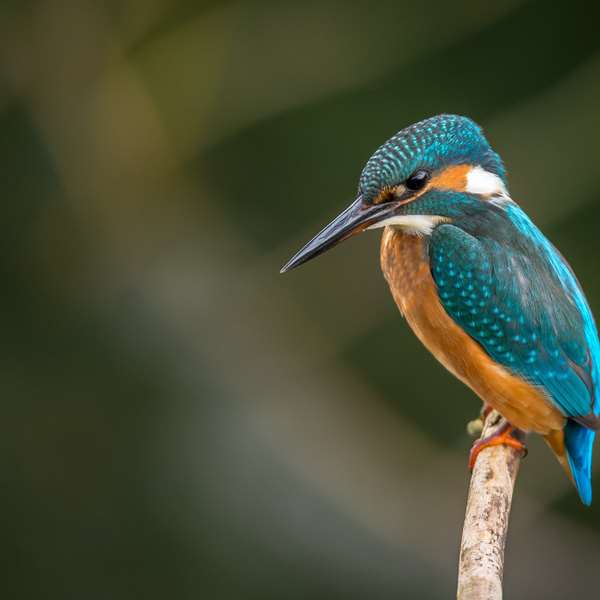
Ornithology course online. This course is designed to introduce students to the varied world of birds, their diverse species, habitats and physiology.
You’ll learn what is a bird, their evolutionary process and how they adapted in order to colonize the air, land and water. Understand the habits of different birds, from water birds and parrots, to town birds and birds of prey.
Through a combination of reading, completing course lessons and assignments, interacting with your tutor, researching combined with our practical tasks, as well as observing, you’ll learn a wide variety of bird facts.
If your working or wishing to work with birds and animals, life scientists and environmental researchers and consultants, amateur bird watchers, or anyone who has a passion and interest in birds, this course will definitely expand your knowledge.
Read What Our Students Think!
“Hi Cara
I have fond memories of studying for my ornithology course at ADL. It was a lovely course to do. Kind regards” – Mark G – Certificate in Ornithology – UK
“The certificate has arrived and I feel very proud of it. Can say that I thoroughly enjoyed the course, learnt a huge amount. I have got involved with the British Trust for Ornithology, which is the organisation that does surveys on the bird life in Britain. I now hope to get more involved in their survey work, this is the direction I want to go.  Thanks again for all your encouragement.” Alison S – Certificate in Ornithology – UK
“It exceeded my expectations. It was more comprehensive than I expected and the assignments really stimulated deep study of the subject. Thank you for your guidance.  I am delighted with my certificate and will recommend this course and ADL to my friends and colleagues.”
G Flaherty – Â Certificate in Ornithology –Â Ireland
Course Information
Click the + and – below to expand/collapse the sections.
Lesson Structure:Â Ornithology BEN102
There are 9 lessons:
- Classification and Introduction to Bird watching
- Nature and scope of ornithology (over 9,000 species)
- Place of Birds in Nature
- Bird Classification (Aves, Ratitae, Carinate)
- Use of common names and scientific names
- Fossil or Extinct Birds
- Classes and Sub Classes
- Comparing characteristics of different Super orders
- Comparing characteristics of all major bird Families
- Resources for further information
- Bird Watching equipment
- The Biology of Bird
- Anatomical feature
- Skeleton
- FeathersFeather Colour
- Wings
- Wing Types (elliptical, high speed, long soaring, high lift)
- Legs and Feet
- Beaks and BillsInternal Structure
- RespirationExcretion
- Digestion
- Circulation
- Senses
- Avian Behaviours (Flight, Diving, Reproduction, Courtship, Bonding, Territoriality, Nesting)
- Formation of Eggs and Hatching
- Feeding
- Vocalisations
- Migration
- Habitats
- Anatomical feature
- Common and Widespread Land Birds.
- Eagles and Relatives; Carthatidae (New World vultures, condors)
- Pandionidae (osprey)
- Accipitridae (hawks, eagles, kites)
- Sagittariidae (secretary bird)
- Falconidae (falcons, caracaras)
- Crows and their Relatives
- Butcher birds, Currawongs and related birds
- Pigeons (structure, feeding, breeding, types)
- Doves
- The Dodo
- Cuckoos
- Pest and Introduced Birds (for man countries); Indian Mynah, Sparrow, Thrush, Starling, etc
- Giant Birds and Long Legged Birds.
- Ratitites; Ostrich, Emu, Moa, Rhea, Cassowary, Kiwi, South American Tinamous, extinct giant Elephant bird and Dodo
- Herons, Storks and relatives
- Seabirds and Water birds.
- Anseriformes; ducks, geese, swans etc
- Gruiformes; cranes, coots, mud hens, rails
- Charadriiformes; sandpipers, snipes, curlews, plovers, dotterels, etc
- Gaviiformes; divers
- Gulls, Skuas, Auks, Puffins, Terns
- Tube Nosed Birds
- Albatrosses
- Petrels, Storm Petrels and Diving Petrels
- Pelicans and Relatives
- Gannets
- Cormorants
- Boobies, Frigate Birds, Tropic Birds, Penguins
- Hunters -Birds of Prey, Owls, and Kingfishers.
- Eagles
- Eagle species
- Hawks
- Kites
- Osprey
- Falcons
- Vultures
- Owls
- Breeding behaviours of birds of prey
- Kingfishers
- Passeriformes.
- Scope of “songbirds” or “perching birds”.
- Features common to Passeriformes
- Varieties of Passeriformes (Primitive and Advanced)
- Muscicapidae; thrush
- Robins
- Flycatchers, Larks, Pippits, Wingtails
- Swallows and Martins; physical characteristics, breeding and nesting
- Fringilllidae; finches
- Other Birds.
- Parrots; structure, feeding, breeding, species
- Honeyeaters, Swifts
- Galliformes; chicken.
- Other Orders
- Attracting, Feeding and Keeping Birds.
- How plants benefit birds
- Plants that attract birds
- Feeding Birds
- Bird Care; parasites, catching and handling, caring for a sick bird
- Common Ailments
Learning Goals:Â Ornithology BEN102
- Discuss the study of birds, including bird taxonomy
- Describe anatomical and physical characteristics of birds.
- Discuss a range of different common and widespread land birds.
- Discuss a range of different flightless and long legged birds including Ratites and Ciconiiformes.
- Discuss and describe a range of water birds and sea birds.
- Discuss and describe a range of hunting birds.
- Discuss and describe a range of Passeriformes.
- Discuss and describe a range of parrots and other birds..
- Explain domestication of birds and the methodology and implications of attracting and feeding wild birds.
Practicals:Â What you will be doing during this Course
- Contact a Birdwatching Club or organisation in your own country, or region of the world, and find out what services and information they offer. You may locate groups on the internet, or listed under clubs and organisations in the Yellow Pages section of your phone book. You might contact them on the phone, or by email, by letter; or by attending a meeting.
- Write a brief history of the evolution of birds mentioning of species that have become extinct and give reasons as to why you think this occurred.
- Research and discuss the breeding cycle of one particular bird species (of your own choosing), then identify any traits or behavioural patterns that are unique to this species
- Select different birds from groups studied, and research each different bird using any resources you have available to you, such as textbooks, the internet, libraries, etc. Write a paragraph describing each of the six birds you selected, giving a detailed description of their external appearance, together with details of their distribution, structure, feeding habits and breeding. If possible, focus on any birds from each group that inhabit or regularly migrate to your region.
Vicky Protopapadaki
MSc (Distinction) Applied Animal Behaviour and Animal Welfare (University of Edinburgh), BSc Business Administration (University of the Aegean), Cert. Companion Animal Behaviour (University of Edinburgh ), Cert. Animal Use and Care (University of Prince Edward Island).
Vicky’s passion for animals led her to obtain her MSc in Applied Animal Behaviour and Animal Welfare, despite her having a background in business and management. Apart from her personal experience with animals, she volunteers at various animal shelters around Greece and has done research on feline behaviour at the University of Prince Edward Island in Canada and on primate behaviour at Edinburgh Zoo. She is currently researching PhD opportunities in the field of animal ethics and studying entrepreneurship for the purpose of creating her own charity for animal protection in Greece.
view a course sample?
please contact a Course Advisor by email on: info@adlhomestudy.co.ukor by phone: (01227)  789 649 and request your copy. A great way to assess the value of our accredited Certificate in Ornithology BEN102 course.
Assessment is based on a combination of completing all assignments and sitting for a final short one and a half hour exam, in your own location.
If you don’t cope well with exams then you may elect to undertake a project instead. This is a popular option.
In addition, most modules have a Set Task at the end of each lesson placed before the assignment. This is an opportunity to undertake practical work to help you acquire knowledge and skills and practical experience. This ADL feature is an added bonus not found at most online schools. Set Tasks are not required for assessment.Â
Some courses also have optional Self-Tests which are available on our online learning platform. These are not available by correspondence or by USB, and do not form part of your overall grade.
- Choose Your Learning Method
You choose how you would like to receive your course material, i.e., Online, USB or Correspondence. The choice is yours. You may also work on online or offline. - Tutor Allocation
Every student is assigned their own dedicated tutor who is an expert in their subject area. They provide as much or as little individual contact as you require. You can contact your tutor whenever you need – your hours are not limited. - Feedback and Assignments
Tutor Feedback is an essential component in helping you understand the subject matter. Tutor feedback is given in the form of notes written on the assignment. We encourage you to contact your Tutor where help with clarification and understanding of course material may be required.
Your assignments are located at the end of each lesson. You submit them for marking whenever you are ready. There is no time limit.  - Set Tasks and Self-Tests
Most modules have a Set Task at the end of each lesson before for the assignment. This is where you get the opportunity to undertake practical work to help you acquire knowledge, skills and practical experience. Many modules also have short Self-Tests. - Exams
Once all assignments have been completed you may then elect to sit for a one and half hour exam in your own location. If you prefer not to take the exam you do have the option to undertake a project instead.
Once the exam or project part of the course is completed, your Certificate is then processed. Please allow approximately 4 weeks for this. - Design Your Own Qualification
ADL offers students the flexibility to self-design their own qualification – bundling together a combination of 100-hour modules into a qualification higher than a certificate.
FREQUENTLY ASKED QUESTIONS
Here is a list of the most often asked FAQ’s.
General
Q. Why should I enrol with the Academy for Distance Learning?
A. Here at ADL, our students are our priority – we treat everyone as a unique individual.
Q. Do I need to buy text books?
A. No, as each module has been written by highly qualified industry professionals. The content of the material is presented in such a way that text books are not required. However, if you require additional reading your tutor will be able to supply a list.
Q. What happens if I have to stop studying for a while? (eg. become sick, go on holidays, have a baby, move house, etc)
A. It’s OK to take a break and start up your study at a later point in time. Just let us know.
Q. Is there an age limit?
A. There is no maximum age limit. We do however, have a minimum age limit of 18 years. Below that age parental consent would be required.
Q. Are your courses up-to date?
A. Our courses are revised and updated on a rotation system.
Q. Do you have a Cancellation policy?
A. Yes. We have a cancellation policy that is fair and equitable. For further details please click here.
Q. Will I have any opportunity to engage with other students?
A. We have a Student Community group based on facebook! If you don’t have a facebook account already, you could make one just for talking with fellow students on the group.
Enrolment
Q. When can I enrol/start?
A. You may enrol and start at any time of the year – it’s all self- paced.
Q. Can I study from anywhere in the world?
A. Our courses are available to anyone, anywhere in the world from the comfort of your own home. The course content is relevant to any country, culture or economy.
Q. How long do I have to complete the course?
A. You complete the course at any time that is convenient for you.
Q. Completing a 100 hour module – how long will it take?
A. For some students a 100 hour module will take approximately to 3- 6 months to complete. Others take less time and some even longer.
Assessment
Q. Assessment – how does it work?
A. For each 100 hour module you are assessed by assignments (at the end of each lesson) and a final one and a half hour exam (or you may elect to complete a Project, instead of sitting the exam) – the choice is yours – you sit for the exam in your own location.
Q. I don’t cope well with exams – what can I do?
A. You may elect to undertake a Project (set by your tutor) instead of sitting the exam. Projects are completed from your home and can usually take a couple of weeks to complete.
Q. If my assignment is not up to standard is there an opportunity to resubmit my work?
A. Yes –
Q. How many assignments do I need to complete for each module?
A. At the end of each lesson, there is an assignment – so if a course has say, 10 lessons, there would be 10 assignments.
Q. I am having difficulty attending workshops/industry meetings, what can be done?
A. If your course requires attendance at workshops, conferences, or industry meetings; alternative arrangements can be made in your country.
Qualifications
Q. Can I customize my diploma/higher qualification?
A. Not all educational institution’s certificates /diplomas meet everyone’s needs. The opportunity to Design Your Own Diploma at the Academy (subject to our approval) is an added bonus, not found at other colleges. You choose modules that you think will help you in achieving your goal.
Q. What do I get when I complete the course? Will I receive a transcript?
A. At the completion of all courses and providing all assignments and exam requirements have been met, you will receive your Award and a Transcript.
Tutors
Q. Our tutors – who are they?
A. We appoint Tutors and require that they must be currently active in their industry, with at least 5 years’ experience in their chosen profession.
Q. Can I contact my tutor at any time?
A. Yes – you have unlimited access to your tutor via email through our Online Classroom. You can always leave a message with ADL requesting your tutor to contact you. You decide on how much or how little contact you wish to have.
Q. Practical work – How is this done?
A. To find out more about this part of the course please visit the section on How Our Courses Work here.
What your tuition fees include
- All Course Material via Online, USB or Correspondence
- Assignments Marked
- Professional Tutor Feedback
- Set Tasks - Practical Exercises to help you develop skills
- Self-Tests – multiple choice questions at the end of lessons in most modules
- Unlimited Personal Tutor Support – via our student classroom
- Committed and Friendly Admin Support – vital to your success
- All ADL Exam or Project fees (exception RHS exams)
- Qualification Certificate
- Official Transcript with assignment grades
- Student Manual
Plus FREE
- Academic Writing course (optional - 10 hours only)
- Critical Thinking course (optional - 10 hours only)
- Job Seekers Careers Guide
- Study Tips on How To Study Better
- Career Counselling by ADL Staff
- CV Writing Help, Tips and Advice


Vicky Protopapadaki