ADL will be closed for the Easter Break from Friday 29th March , we will reopen normal opening hours on Tuesday 2nd April 2024 from 9am to 5pm.
We wish all our students a very happy Easter!
Call us: +44 (0)1227 789 649 - Monday to Friday 9am to 5pm
Managing Mental Health in Adults
Managing Mental Health in Adults Level 3 100 Hours Certificate Course
Course Code:
BPS216 CLD
Level:
3
Start:
Anytime
Finish:
Anytime
Study From:
Anywhere
Tutor Support:
Unlimited Access
Pinterest
Twitter
Facebook
Email
LinkedIn
Facebook
Contact us
PayPal Pay Later
Pay in 3 interest-free payments
Choose PayPal at checkout to pay later with Pay in 3.
Complete your purchase with the first payment today.
Remaining payments are taken automatically.
Pay in 3 is a form of credit, so carefully consider whether the purchase is affordable and how you will make the repayments. Be aware of the possible impact of using Pay in 3 and of missing payments, including making other borrowing more difficult or more expensive. Pay in 3 eligibility is subject to status and approval. 18+ UK residents only. Available for purchases of £30 to £2,000. Terms and conditions apply. PayPal Pay in 3 is a trading name of PayPal (Europe) S.à r.l. et Cie, S.C.A. 22-24 Boulevard Royal L-2449, Luxembourg.
Learn About Managing Mental Health in Adults
Managing Mental Health in Adults Online Course
ADLs Managing Mental Health in Adults Online Course helps you to understand the signs, symptoms and possible treatments of adult mental health problems
We often hear about mental health issues, mental illness, psychological disorders, and so on, but what do we actually mean by good mental health?
This level 3 course has been accredited by the CMA – The Complimentary Medical Association. On completion of any qualifying module, you can join as a “Fully Qualified Practitioner” and be entitled to use the post-nominal latters “MCMA” after your name. CMA Full Membership is a privileged position and the fact that you have been accepted for CMA Membership demonstrates that you have a clear commitment to standards and professionalism. CMA Members in all categories are recognised as the elite in their field.
Managing mental health is far easier if the sufferer is positive about addressing their problems, and willing to make an effort to help themselves. Although this may not always be possible, for instance those with depression are often unable to think positively, an optimistic attitude can be very helpful.
Mental health professionals should, where possible, attempt to help a sufferer to help themselves. Often this means finding ways to alleviate severe symptoms which the individual has little or no control over, and then educating the sufferer in terms of practical techniques and strategies they may be able to use to help control symptoms.
Definition of Abnormality – Statistical Infrequency
Definition of Abnormality – Failing to Function Adequately
Labeling and Mental Health
How this relates to mental illness
Case Study – African Caribbean People and Schizophrenia
More on Stigmatisation and Labelling
Causes of Mental Illness
Social and Environmental Factors
Physical Factors
Psychological Factors
Diathesis Stress Model
Treatments for Mental Health Problems: Medication, Psychotherapy
2 Depression and Related Conditions
Introduction
Psychological Symptoms
Social symptoms
Physical Symptoms
Forms of Depression: Dysthymia, Unipolar Depression, Bipolar Depression
Determining Which Type of Depression
Triggers to Depression
Causes of Depression
Risk Factors for Depression
Risk Factors for Major Depression
Gender and Depression
Older People and Depression
Symptoms
Changes Due to Ageing
Psychological Aspects of Long Term Growth: Psychosocial Factors i.e. Family, Work, Financial, Loneliness
Other Sub-Types of Depression: Psychotic Depression, Seasonal Affective Disorder (SAD)
Symptoms of SAD
Diagnosis of SAD
Post Natal Depression
Postnatal Psychosis
Treatments for Depression: Talking Therapies, Medication for Depression, ECT (Electroconvulsive Therapy), New Research On Memory, VNS (Vagus Nerve Stimulation), Transcranial Magnetic Stimulation
Alternative Treatments
Treatment for SAD
Treatment for PND
Treatment for Psychotic Depression
3 Anxiety and Related Conditions
Introduction
Generalised Anxiety Disorder
OCD (Obsessive Compulsive Disorder)
Phobias
Simple Phobia and Complex Phobia
Physical Symptoms of Phobias
PTSD (Post Traumatic Stress Disorder)
Symptoms of PTSD
Panic Attacks
Symptoms of Panic Attacks
Treatments for Anxiety
Treatment of OCD
Treatments for Panic Disorders
Treatment of Phobias
Treatment of PTSD
4 Schizophrenia
Introduction
Causes of Schizophrenia: Genetics, Neurotransmitters, Brain Development, Birth and Pregnancy Complications, Triggers
Symptoms of Schizophrenia
Positive Symptoms
Negative Symptoms
Diagnosing Schizophrenia
Sub-types of Schizophrenia
Treatment of Schizophrenia: Antipsychotic Drugs, Antidepressants and Mood Stabilisers
Management of the Acute Syndrome
5 Personality Disorders
Introduction
Millon’s Subtypes
Antisocial Personality Disorder (Psychopathy)
Causes of Psychopathy
Treatment of Psychopathy
6 Eating Disorders
Introduction
Causes of Eating Disorders
Anorexia Nervosa (AN)
Body Image and Self Esteem
Physical Symptoms of Anorexia
Two subtypes of anorexia are commonly recognised
Treatment for Anorexia
Bulima Nervosa (BN)
Associated Behaviours
Physical Symptoms of Bulimia Nervosa
Recognised subtypes
Treatment for Bulimia
Obesity
Psychological Complications
Treatment for Obesity
Other Disorders
7 Dementias
Introduction
Definition
Types of Dementia: Cortical Types, Sub-cortical Types, Mixed Types
Causes of Dementia
Dementia and Old Age
Alzheimer’s Disease: Sub-types, Treatment
Vascular Dementia: Sub-types, Treatment
Care and Management of Dementia
The Role of Carers
8 Helping Yourself With Mental Health Issues
Introduction
A Holistic Approach to Mental Health
Imbalances in the Body
Psychological & Psychosocial Factors
The Role of Friends and Family – Social Support Networks
Self-Help Groups
Self-Control Techniques
9 Support Options and Services for Mental Health Issues
Introduction
Counselling Approaches
Counsellor
Psychotherapist
Clinical Psychologist
Psychiatrist
Nurses and Professional Carers
Crisis Centres
Telephone Counselling
Email or Online Counselling
Group Therapy
Problems of Group Therapy
Complementary Therapies
Each lesson culminates in an assignment which is submitted to the school, marked by the school’s tutors and returned to you with any relevant suggestions, comments, and if necessary, extra reading.
Learning Goals
Learning Goals:Mental Health in Adults BPS216
Discuss the nature, scope and impact of mental health on adults of all ages.
Explain the different types of depression and the impact of gender on depression.
Explain the nature of anxiety and related conditions, and consider possible responses that may be used for these conditions.
Explain the nature of schizophrenia and consider the responses that might be taken to such conditions.
Explain the scope and nature of antisocial personality disorders, and consider the responses that might be taken to such conditions.
Explain the scope and nature of eating disorders in adults, and consider the responses that might be taken to such conditions.
Explain the scope and nature of dementia in adults, and consider the responses that might be taken to such conditions.
Identify a wide range of self-help options that can be facilitated for sufferers of mental health problems.
Identify mental health services and support options available for those with mental health issues.
Practical (Set Tasks)
Examinations
Program Summary
More Information
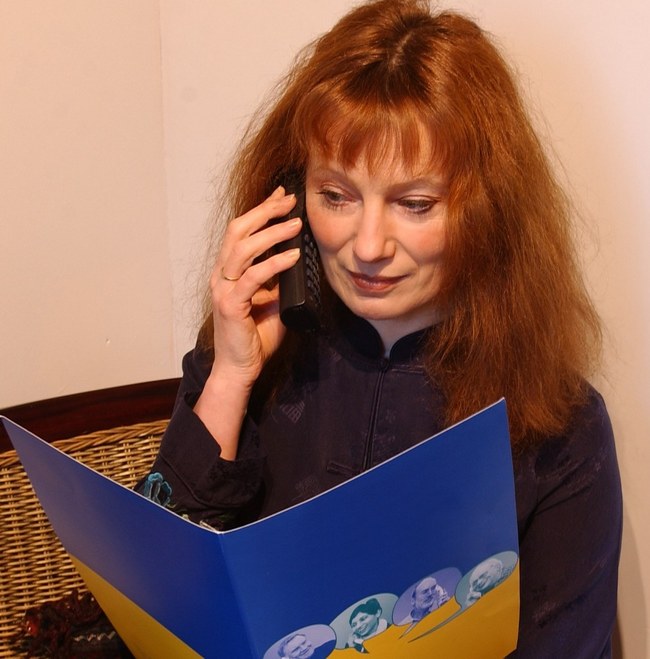
Your learning experience with ADL will not only depend on the quality of the course, but also the quality of the person teaching it. This course is taught by Iona Lister and your course fee includes unlimited tutorial support throughout. Here are Iona’s credentials:
Iona Lister Licentiate, Speech and Language Therapy, UK, Diploma in Advanced Counselling Skills.
Iona has been a clinician and manager of health services for fifteen years, and a trainer for UK-based medical charities, focusing on psychosocial issues, mental health disorders, and also the promotion of communication skills for people in helping roles. She tutors and facilitates groups via workshops and teleconferences, and now specialises in Sight Loss. As a freelance writer, she contributes regular feature articles for magazines, has written five published books, as well as published courses relating to personal development and counselling skills.
Iona has also written published books, courses and articles across a wide range of subjects, mostly in the areas of health, counselling, psychology, crafts and wildlife.
She has drawn experience from clinical and managerial experience within the NHS as well as medical and humanitarian subjects. She has been a regular feature writer and expert panel member of a national magazine for six years.
Books include: A Guide to Living with Alzheimer’s Disease (and associated dementias), The Psychology of Facial Disfigurement; a Guide for Health and Social Care Professionals, When a Medical Skin Condition Affects the Way you Look; A Guide to Managing Your Future, Facing Disfigurement with Confidence, Cross Stitch: A Guide to Creativity and Success for Beginners. Courses written include: Mental Health and Social Work, Counselling Skills, Understanding and Responding to Substance Misuse, Journalling for Personal Development, Guided Imagery, Stress Management.
Current work includes: Tutor: Courses associated with Creative Writing, Counselling Skills, Psychology, Holistic Therapy, Certified Hypnotherapist and Hypnotension Practitioner.
Facilitator of Teleconference Groups: Royal National Institute of Blind People (RNIB)
Trainer (Skills for Seeing): Macular Society
Reviewer of Books/Information: Macmillan Cancer Support
Fundraiser: Royal Society for the Protection of Birds (RSPB), Embroidery/Art Groups Facilitator, Board Member
Website Manager: The Strathcarron Project, Coordinator (Delaware & Tennessee) Human Writes
Excerpt from the Course
Diagnosing Mental Health
When a psychiatrist, doctor or psychologist assesses a person’s mental health, they will look at the symptoms they possess, then consider what condition they are suffering from.
Within the field of mental health, DSM (Diagnostic and Statistical Manual) or the ICD (International Statistical Classification of Disease) are often used. So, if a person has the symptoms and signs of schizophrenia, the practitioner would say they have schizophrenia. That is a very simplistic explanation of how the process works, but following testing and diagnosis, the person may be told they have schizophrenia. When the practitioner knows they have schizophrenia, they can then determine how the person can be supported or treated. The use of labels in this way ensures that the person receives the correct help and treatment they require.
However, labeling is not always appropriate. If a person’s condition is labelled as ‘mentally ill’ or ‘schizophrenic’ this might have adverse consequences on their self-esteem which is already likely to be fragile. The label becomes their dominant label or master status. It changes the way a person is viewed and treated which can lead to stigmatisation and discrimination.
Assessment
Assessment is based on a combination of completing all assignments and sitting for a final short one and a half hour exam, in your own location.
If you don’t cope well with exams then you may elect to undertake a project instead. This is a popular option.
In addition, most modules have a Set Task at the end of each lesson placed before the assignment. This is an opportunity to undertake practical work to help you acquire knowledge and skills and practical experience. This ADL feature is an added bonus not found at most online schools. Set Tasks are not required for assessment.
Some courses also have optional Self-Tests which are available on our online learning platform. These are not available by correspondence or by USB, and do not form part of your overall grade.
How our courses work
Choose Your Learning Method You choose how you would like to receive your course material, i.e., Online, USB or Correspondence. The choice is yours. You may also work on online or offline.
Tutor Allocation Every student is assigned their own dedicated tutor who is an expert in their subject area. They provide as much or as little individual contact as you require. You can contact your tutor whenever you need – your hours are not limited.
Feedback and Assignments Tutor Feedback is an essential component in helping you understand the subject matter. Tutor feedback is given in the form of notes written on the assignment. We encourage you to contact your Tutor where help with clarification and understanding of course material may be required.
Your assignments are located at the end of each lesson. You submit them for marking whenever you are ready. There is no time limit.
Set Tasks and Self-Tests Most modules have a Set Task at the end of each lesson before for the assignment. This is where you get the opportunity to undertake practical work to help you acquire knowledge, skills and practical experience. Many modules also have short Self-Tests.
Exams Once all assignments have been completed you may then elect to sit for a one and half hour exam in your own location. If you prefer not to take the exam you do have the option to undertake a project instead. Once the exam or project part of the course is completed, your Certificate is then processed. Please allow approximately 4 weeks for this.
Design Your Own Qualification ADL offers students the flexibility to self-design their own qualification – bundling together a combination of 100-hour modules into a qualification higher than a certificate.
FAQ
FREQUENTLY ASKED QUESTIONS
Here is a list of the most often asked FAQ’s.
General
Q. Why should I enrol with the Academy for Distance Learning? A. Here at ADL, our students are our priority – we treat everyone as a unique individual.
Q. Do I need to buy text books? A. No, as each module has been written by highly qualified industry professionals. The content of the material is presented in such a way that text books are not required. However, if you require additional reading your tutor will be able to supply a list.
Q. What happens if I have to stop studying for a while? (eg. become sick, go on holidays, have a baby, move house, etc) A. It’s OK to take a break and start up your study at a later point in time. Just let us know.
Q. Is there an age limit? A. There is no maximum age limit. We do however, have a minimum age limit of 18 years. Below that age parental consent would be required.
Q. Are your courses up-to date? A. Our courses are revised and updated on a rotation system.
Q. Do you have a Cancellation policy? A. Yes. We have a cancellation policy that is fair and equitable. For further details please click here.
Q. Will I have any opportunity to engage with other students? A. We have a Student Community group based on facebook! If you don’t have a facebook account already, you could make one just for talking with fellow students on the group.
Enrolment
Q. When can I enrol/start? A. You may enrol and start at any time of the year – it’s all self- paced.
Q. Can I study from anywhere in the world? A. Our courses are available to anyone, anywhere in the world from the comfort of your own home. The course content is relevant to any country, culture or economy.
Q. How long do I have to complete the course? A. You complete the course at any time that is convenient for you.
Q. Completing a 100 hour module – how long will it take? A. For some students a 100 hour module will take approximately to 3- 6 months to complete. Others take less time and some even longer.
Assessment
Q. Assessment – how does it work? A. For each 100 hour module you are assessed by assignments (at the end of each lesson) and a final one and a half hour exam (or you may elect to complete a Project, instead of sitting the exam) – the choice is yours – you sit for the exam in your own location.
Q. I don’t cope well with exams – what can I do? A. You may elect to undertake a Project (set by your tutor) instead of sitting the exam. Projects are completed from your home and can usually take a couple of weeks to complete.
Q. If my assignment is not up to standard is there an opportunity to resubmit my work? A. Yes –
Q. How many assignments do I need to complete for each module? A. At the end of each lesson, there is an assignment – so if a course has say, 10 lessons, there would be 10 assignments.
Q. I am having difficulty attending workshops/industry meetings, what can be done? A. If your course requires attendance at workshops, conferences, or industry meetings; alternative arrangements can be made in your country.
Qualifications
Q. What qualification will I receive? A. For individual modules, you would be awarded a Certificate endorsed by TQUK (Training Qualifications, UK), providing you complete all assignments and the exam. If you just want to complete only the assignments and not sit for the exam or finish a Project, then a Letter of Achievement would be awarded. For more details on qualifications available please click here.
Q. Can I customize my diploma/higher qualification? A. Not all educational institution’s certificates /diplomas meet everyone’s needs. The opportunity to Design Your Own Diploma at the Academy (subject to our approval) is an added bonus, not found at other colleges. You choose modules that you think will help you in achieving your goal.
Q. What do I get when I complete the course? Will I receive a transcript? A. At the completion of all courses and providing all assignments and exam requirements have been met, you will receive your Award and a Transcript.
Tutors
Q. Our tutors – who are they? A. We appoint Tutors and require that they must be currently active in their industry, with at least 5 years’ experience in their chosen profession.
Q. Can I contact my tutor at any time? A. Yes – you have unlimited access to your tutor via email through our Online Classroom. You can always leave a message with ADL requesting your tutor to contact you. You decide on how much or how little contact you wish to have.
Q. Practical work – How is this done? A. To find out more about this part of the course please visit the section on How Our Courses Work here.
Career Options
What's Included
What your tuition fees include
All Course Material via Online, USB or Correspondence
Assignments Marked
Professional Tutor Feedback
Set Tasks - Practical Exercises to help you develop skills
Self-Tests – multiple choice questions at the end of lessons in most modules
Unlimited Personal Tutor Support – via our student classroom
Committed and Friendly Admin Support – vital to your success
All ADL Exam or Project fees (exception RHS exams)
If you require further details about any of the RHS industry recognised qualifications please, call one of our friendly RHS Course Advisors on +44 (0)1227 789 649 or email: [email protected]
Q: When can I Enrol/Start My RHS Course With ADL? A: Anytime, Anywhere. There are no enrolment deadlines.
Q: I live Overseas. Can I Study From Overseas? A: You can study any of the RHS theory qualifications overseas. All courses are offered in English. You will need to email RHS Qualifications direct to arrange sitting for your examination overseas.
Q: Is There a Time Limit for Completing an RHS Qualification? A: At present there are no time limits. However, RHS is contemplating in the future, the introduction of course time-lines.
Q: Are There Any Entry Requirements (Pre-Requisites)? A: The RHS Theory courses do not require prerequisites, previous experience or any knowledge of horticulture. You just need passion for all things horticulture.
Q: What Course Should I Start With First? I Am New To RHS Qualifications. A: We highly recommend that you start with Level 2 – Principles of Garden Planning, Establishment and Maintenance.
Q: What Does ADL Course Material Include? A: Includes Power Point Presentations, Videos and written course lessons.
RHS EXAMS
Q: When Do Exams Take Place? A: Exams are held on fixed dates in February and June of each year. You should register as a candidate at least 3 months before these dates, so please do not leave exam registration to the last minute
Q: Where Do I Take My Exams? A: UK: You take the exams at the RHS Wisley Centre, located between Cobham and Ripley in Surrey or at other authorised RHS centres around the UK. Overseas: please email RHS qualifications direct for centre information.
To speak to one of our course advisors, please enter your name and phone number below and click the "Please Call Me" button. We will call you back as soon as possible!
By submitting this form, I provide my consent to ADL to contact me via email or telephone, regarding the course I selected. All information provided is protected in conformity with our Privacy Policy.
CONTACT US
required fields are marked with *
By submitting this form, I provide my consent to ADL to contact me via email or telephone, regarding the course I selected. All information provided is protected in conformity with our Privacy Policy.





 Iona Lister