

Call us: +44 (0)1227 789 649 - Monday to Friday 9am to 5pm
Child Psychology
Child Psychology Level 3 100 Hours Certificate Course
Course Code:
BPS104 CLD
Level:
3
Start:
Anytime
Finish:
Anytime
Study From:
Anywhere
Tutor Support:
Unlimited Access
Pinterest
Twitter
Facebook
Email
LinkedIn
Facebook

Contact us
PayPal Pay Later

Pay in 3 interest-free payments
-
Choose PayPal at checkout to pay later with Pay in 3.
-
Complete your purchase with the first payment today.
-
Remaining payments are taken automatically.
Pay in 3 is a form of credit, so carefully consider whether the purchase is affordable and how you will make the repayments. Be aware of the possible impact of using Pay in 3 and of missing payments, including making other borrowing more difficult or more expensive. Pay in 3 eligibility is subject to status and approval. 18+ UK residents only. Available for purchases of £30 to £2,000. Terms and conditions apply. PayPal Pay in 3 is a trading name of PayPal (Europe) S.à r.l. et Cie, S.C.A. 22-24 Boulevard Royal L-2449, Luxembourg.
Learn About Child Psychology
Child Psychology course online. Learn to understand psychological development in children.
Child psychology is concerned with the development of a person over the course of their childhood. This involves the development of a child’s mental processes (ie. cognitive development); emotional and social behaviour. Although development doesn’t end at adulthood, some characteristics are more easily developed and changed during childhood.
Enrol on this level 3 accredited course to understand psychological development in children. Learn how children develop psychologically as they grow, and what factors (such as learning, parenting styles, reinforcement, and genetic makeup) influence their behaviour and thinking. This course will be of invaluable benefit to you if you are:

- A Counsellor.
- A Social Worker.
- A Childcare Worker.
- A Family Liason Officer.
- A Teacher or School Worker interacting with children.
- In the Medical Profession.
- Someone who works in Children’s Services.
- A Psychology Student.
- A Psychologist wanting to increase your area of expertise.
- A Parent who would just like to understand your children better.
- A Foster Carer or Legal Guardian.
- Someone wishing to pursue a career in working with children.
If you are a professional, this course should give you the knowledge and skills to advise on how to provide an environment that nurtures an individual child’s emotional, cognitive and moral development.
If you are a parent, foster carer or legal guardian, the course will give you a better understand of your child’s thoughts, feelings and behaviour, plus teach you skills to help your child to grow and develop. In short, to be a better parent.

Course Information
Other Categories
Lessons
Learning Goals
Lesson Structure: Child Psychology BPS104
- Introduction to Child Psychology
- Levels of development, nature or nurture, isolating hereditary
characteristics, cause versus correlation, continuity versus discontinuity,
cross sectional and longitudinal studies, reliability of verbal reports
- Levels of development, nature or nurture, isolating hereditary
- The Newborn Infant
- The Interactionist approach, range of reaction, niche picking,
temperament stimulus seeking, emotional disturbances during pregnancy
- The Interactionist approach, range of reaction, niche picking,
- States and Senses of the Infant
- Sensory discrimination, infant states (sleep, inactivity, waking, crying etc),
why psychologists are concerned with defining and describing infant states,
habituation, crying, soothing a distressed baby, sensory discrimination,
depth perception, oral sensitivity
- Sensory discrimination, infant states (sleep, inactivity, waking, crying etc),
- Learning
- Habituation, vicarious learning, classical conditioning, operant conditioning,
reinforcement, the importance of learning control, etc
- Habituation, vicarious learning, classical conditioning, operant conditioning,
- Emotions and Socialisation
- Producing and recognising emotional expression, smiling, biological explanation,
perceptual recognition, mother-child Attachment, Freudian approach, Bowlby’s approach,
Social Learning approach, Harlow’s approach, role of cognition in attachment formation, day care
- Producing and recognising emotional expression, smiling, biological explanation,
- Cognitive Development
- Developing the ability to reason.
- Language Development
- Is language ability learned or innate? Social Learning Approach, Hypothesis testing approach,
under extending
- Is language ability learned or innate? Social Learning Approach, Hypothesis testing approach,
- Intelligence
- Measuring Intelligence, Cultural Bias, IQ, Testing Intelligence as a tool.
- Socialisation … Part A
- Social Cognition, self awareness, awareness of others, development of empathy,
taking turns, having a point of view/perspective, social scripts, pretend play
- Social Cognition, self awareness, awareness of others, development of empathy,
- Morality
- Moral development, aggression and altruism, Freud, Piaget and Kohlberg on moral development
- Sexuality
- Freud’s phases (oral phase, anal phase, phallic phase, latent phase, genital phase),
gender and role Identity, psycho-social development
- Freud’s phases (oral phase, anal phase, phallic phase, latent phase, genital phase),
- Socialisation … Part B
- Family influence, discipline, siblings, family structures, school influence, peer influence,
acceptance and rejection, modelling, reinforcement.
- Family influence, discipline, siblings, family structures, school influence, peer influence,
Practical (Set Tasks)
Practicals:
- Discuss what environmental and social aspects you think are required for the ideal environment for a developing child in your country.
- Genetic and environmental factors operate together in influencing the child’s personality development” Discuss the above statement.
- Name and describe one personality characteristic which may be genetically determined. What evidence supports the possibility that it may be hereditary?
- Genetic and environmental factors operate together in influencing the child’s personality development”Discuss the above statement.
- Name and describe one personality characteristic which may be genetically determined.
- What evidence supports the possibility that it may be hereditary?
- Name the kind of learning in which a stimulus which usually produces an unconditioned response is manipulated to produce a conditioned response. Give an example of this kind of learning.
- Discuss exactly how you would use operant conditioning to encourage a child to socialise.
- Use the perceptual recognition approach to explain smiling and fear in infants.
- How are Freud, Harlow and Bowlby explanations of the formation of mother-child attachments different? Which do you think is more credible and why?
- Explain reflection-impulsivity, and its significance in cognitive development.
- Explain the strengths and weakness of social learning theory in explaining language acquisition.
Examinations
Program Summary
More Information
Your learning experience with ADL will not only depend on the quality of the course, but also the quality of the person teaching it. This course is taught by Iona Lister and your course fee includes unlimited tutorial support throughout. Here are Iona’s credentials:
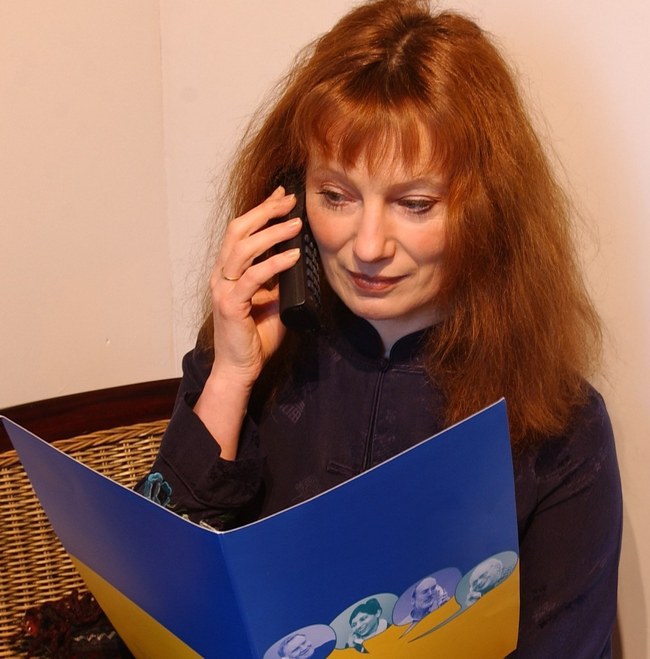
Licentiate, Speech and Language Therapy, UK, Diploma in Advanced Counselling Skills.
Iona has been a clinician and manager of health services for fifteen years, and a trainer for UK-based medical charities, focusing on psychosocial issues, mental health disorders, and also the promotion of communication skills for people in helping roles. She tutors and facilitates groups via workshops and teleconferences, and now specialises in Sight Loss. As a freelance writer, she contributes regular feature articles for magazines, has written five published books, as well as published courses relating to personal development and counselling skills.
Iona has aslo written published books, courses and articles across a wide range of subjects, mostly in the areas of health, counselling, psychology, crafts and wildlife.
She has drawn experience from clinical and managerial experience within the NHS as well as medical and humanitarian subjects. She has been a regular feature writer and expert panel member of a national magazine for six years.
Her books include: A Guide to Living with Alzheimer’s Disease (and associated dementias), The Psychology of Facial Disfigurement; a Guide for Health and Social Care Professionals, When a Medical Skin Condition Affects the Way you Look; A Guide to Managing Your Future, Facing Disfigurement with Confidence, Cross Stitch: A Guide to Creativity and Success for Beginners.
Courses written include: Mental Health and Social Work, Counselling Skills, Understanding and Responding to Substance Misuse, Journalling for Personal Development, Guided Imagery, Stress Management.
Current work includes: Tutor: Courses associated with Creative Writing, Counselling Skills, Psychology, Holistic Therapy, Certified Hypnotherapist and Hypnotension Practitioner.
Facilitator of Teleconference Groups: Royal National Institute of Blind People (RNIB)
Trainer (Skills for Seeing): Macular Society
Reviewer of Books/Information: Macmillan Cancer Support
Fundraiser: Royal Society for the Protection of Birds (RSPB), Embroidery/Art Groups Facilitator, Board Member
Website Manager: The Strathcarron Project, Coordinator (Delaware & Tennessee) Human Writes
Excerpt from the Course
INTRODUCTION TO CHILD PSYCHOLOGY
Aim
Identify key concepts and issues in child psychology.
Child psychology is concerned with the development of a person over the course of their childhood. This
involves the development of a child’s mental processes (ie. cognitive development); emotional and social
behaviour. It is important to state that development does not end at adulthood. Adults continue to
experience changes in their mental, emotional and social behaviours. Some characteristics are however
more easily developed and changed during childhood.
For convenience, a distinction is made between the cognitive, emotional and social aspects of behaviour.
However, this distinction is purely theoretical. It is made simply to help us learn and understand. In reality,
the different aspects of behaviour interact with each other. When problems develop in any area of
development, they usually become rapidly evident in other areas as well. The study of child psychology is
partly concerned with identifying such interrelationships.
NATURE-NURTURE
Needless to say, child psychologists are particularly interested in discovering the causes of certain
patterns of behaviour in children. They are interested, for instance, in how the child’s environment and
relationships (eg. home, school & neighbourhood) affect the child’s development. This involves an
attempt to establish causes. They are also interested in “outcomes” of certain childhood experiences; for
example, how does the experience of living in a poverty stricken environment affect the later behaviour of
the child? It is difficult to identify “one” solitary cause for any behaviour. Usually a behaviour is far more
complex, having been influenced by a mixture of prior experiences. If you have already studied some
psychology, you have probably learned that there is considerable debate amongst psychologists as to
whether human behaviour is determined primarily by our genetic makeup or whether it is primarily
determined by what we learn through interaction with our environment. This is called the nature-nurture
debate, and is of great interest when trying to understand children’s behaviour.
NATURE
‘Nature’ refers to biological influences on our behaviour. Psychological attributes such as intelligence,
addictiveness and depression may be caused by genetic influences (such as a gene passed on by one
parent, or the human genetic makeup) or by biological factors (such as a hormonal imbalance,
developmental stages, nervous system damage etc.). Hereditary refers to behaviours or characteristics
which have been transmitted from parents to offspring. The units of hereditary are genes, which
determine the course of development in the growing human embryo.
Isolating hereditary characteristics
An interesting research method used by child psychologists to determine which traits and behaviours are
inherited is by comparing monozygotic twins and dizygotic twins. This provides a way of isolating genetic
influence. The rationale is that since monozygotic (identical) twins are born from the same zygote (an
ovum that has been fertilised by a sperm cell), they will have an identical genetic make up. Dizygotic
twins are born from two different zygotes, thus their genetic make up differs as much as any two siblings
genetic make up would.
For example, in a study to determine if intelligence is genetically determined, the researcher will want to
learn if the intellectual capacity of identical twins is more similar, or more closely correlated than that of
dizygotic twins. If it is (and this has actually been discovered to be correct) then the evidence indicates
that intelligence is largely genetically determined.
NURTURE
‘Nurture’ refers to environmental influences, which affect the child’s psychology from its birth, from the
way a child is raised to the food the child eats. Environmental factors can be very difficult to identify,
because in order for them to affect the child’s psychology, they must be registered by the child’s
awareness in a way that has an impact. For instance, most infants will grow sickly and apathetic of they
are deprived of human touch or affection, yet some will be far less affected, perhaps because they do not
register the neglect as strongly, or maybe they have different inner resources. In general, however, we
can include in environmental influences the behaviour and attitudes of parents, family and peers, the
amount and kind of stimulation provided, what a child learns from parents, society, school etc., social and
cultural influences, and the surrounding situation, whether it is predictable and safe or dangerous and
unpredictable.
CAUSE VERSUS CORRELATION
Another issue in studying children’s behaviour is the impossibility, in most cases, of identifying exact
causes. Given the richness of human experience and the abundance of influences upon it, it is generally
not possible to attribute one cause to one characteristic. For example, it has been found that children
brought up in an impoverished environment often have a low level of cognitive ability. Yet we cannot say
that an impoverished environment causes low cognitive ability, because we also know that there are
disadvantaged children who succeed brilliantly in intellectual pursuits. Also, even if we accept that the
environment does affect intelligence, we cannot isolate which particular influence in the environment
causes that effect: is it inadequate education, poor nutrition, stress in the home, lack of play things (eg.
toys), lack of parental attention, or something else? It could be any one (or several) of these.
To overcome this dilemma, instead of considering “cause”, child psychologists will consider the
“correlation” between two variables. In the above case they say that there is a high correlation between
impoverished environment and low cognitive ability in children. A correlation suggests that there is an
association/relationship between two variables – in this case – the environment and cognition.
A correlation does not show that one variable causes another or the direction of the relationship. For
example, if we say aggressive boys show a strong relationship with watching violent TV. Is it because
watching violent TV makes children violent? Or is it because aggressive children tend to watch more
violent TV?
CONTINUITY VERSUS DISCONTINUITY
There is much debate among psychologists on the way people change as they get older.
* Some theorists argue that human development is a process which is continuous and sequential, with
no abrupt changes.
* Others argue that development occurs in stages. The person moves through each stage of
development in a fixed sequence.
CROSS SECTIONAL and LONGITUDINAL STUDIES
Prominent research psychologists in the field of child psychology have employed the following two
research methods to investigate how children change as they grow older.
Cross sectional studies involve a short term study, investigating groups of children from various
different age groups, and looking into how they behave in the same situation. The behaviours of children
of different ages are compared in order to find out how a child’s behaviour changes with age. This
method can show how children’s patterns of behaviour change as they grow, but it cannot explore the
influences behind such change. Nor can it determine the “stability” of characteristics (ie. It cannot show
whether a child of a certain age, exhibits the same characteristics at a later age). Cross sectional studies
cannot do this because they don’t investigate the same children again at a later age. Longitudinal study is
useful in overcoming this problem.
In longitudinal studies, the researcher observes and investigates the behaviour of a group of children
over an extended period of time. The same children are assessed at intermittent intervals, allowing the
researcher to determine how a specific child’s behaviour changes (or remains the same) as he/she grows
older. Under certain conditions, the researcher will also be able to determine factors that influenced a
particular developmental pattern. There are obvious advantages to this type of study, but the time and the
cost involve mean that it is used as often as it could be.
In the UK, a longitudinal study currently taking place is studying children born between certain dates in
2000 and 2001. The Project is called The Child of the Millennium study and will follow the children from
birth to adulthood. This will produce a range of rich data that psychologists, sociologists and other
researchers can use in their research. Preliminary findings are already being published. Similar
longitudinal studies have also taken place in other countries.
RELIABILITY OF VERBAL REPORTS
The first thing that researchers need before they can start working is information on the behaviour of their
subjects. Such information can be obtained through observing a subject under either natural or
experimental situations. In most areas of psychology, however, the research is based upon information
acquired from the subjects themselves, that is, through verbal questioning and verbal report. With
children, this may present some difficulties.
Children may lack the cognitive ability to clearly understand the experimenter’s questions, or may be
unable to express themselves well enough. In addition, they are emotionally vulnerable in strange
situations, so their responses might not be an accurate reflection of their actual experiences.
Investigators have also found that parents are not as reliable as might be desired. Parents’ long term
memory of their children’s behaviour is not generally accurate, and often they are confused as to which of
their children exhibited certain behaviours. Also, parents may tend to idealise their children, and
subliminally censor out their child’s negative behaviours.
Comparisons between parents verbal accounts of their child’s past behaviour, and evidence in medical
records of their child’s previous habits (eg. thumb sucking), often show that parents will deny
remembering such habits, even when they themselves had previously reported those habits to a doctor.
Parents are so very keen to give a positive image of their child-rearing practices, that they often make
errors of omission, unconsciously and unintentionally. This phenomenon is known as “social desirability”
for a respondent will give an answer that he/she thinks the researcher wants or answer in a way that
makes them (or their child) appear to be better than they are.
Solutions to such problems of verbal inaccuracies might be to seek greater detail, hence making parents
think more deeply; for example:
• Asking parents to write a detailed, hour by hour diary of a child’s behaviour patterns.
• Researchers contacting parents at regular intervals to prompt them to record the child’s
behaviour.
Definition
Subliminal – below our conscious
perception.
ETHICS and EXPERIMENTS
The experimental method of research differs from the purely observational method in that the researcher
manipulates aspects of the environment, and measures how this ‘manipulation’ affects the behaviour of
the child. It is important to note that in using experimental conditions in the laboratory, or in the natural
setting, the psychologist must remain ethical. Ethics is concerned with maintaining moral standards and
fairness to all involved. Experimental practices must never involve any action that may harm or disturb
the child subject.
While the parent usually volunteers their child as subjects in psychological experiments, the children too
must be informed of such in a way that is easily understood by them. Young children however, do not
have the cognitive ability to totally understand the reasons and purpose of an experiment, so they may be
vulnerable to feelings of unease. Such feelings should be reduced by way of a caring, sympathetic
attitude in the experimenter.
Withholding information may be necessary for effective research. For example, you cannot tell a child
that you are looking to see how dependant they are on their mother. Deception of the child though,
should be avoided at all costs. The child does have the right to be told information obtained from the
research, as well as any conclusions made from the research.
The child’s welfare should always be a top priority. A child should also be completely free to withdraw
from any experiment at any stage. If significant levels of distress are identified during an experiment, the
child should be withdrawn, whether they ask or not. However, it is becoming a requirement in many
countries that for children under 16 to take part in experiments, that the parent’s written permission is
required.
EBOOK TO COMPLIMENT THIS COURSE:
The Environment Of Play EBook
2nd Edition by John Mason
The Environment of Play eBook course online. Full of inspiring colour images of playgrounds around the world, this book is ideal for designers, park managers, schools and parents! Play is the most important and effective method of learning for adults as well as children. It can be active or passive, planned or spontaneous.
This Ebook is also ideal for you if you are a Counsellor or Psychologist working with children, or wanting to work with children, because you will learn about the relationship between PLAY and the ENVIRONMENT., an important aspect of growing up.
The environment is one of the two most important influences upon a person. We become the people we are, primarily through the influences of:
1. Our biological/chemical (or genetic) make-up.
2. Our surroundings or ENVIRONMENT.
This book is about relationships between PLAY and the ENVIRONMENT.
Assessment
Assessment is based on a combination of completing all assignments and sitting for a final short one and a half hour exam, in your own location.
If you don’t cope well with exams then you may elect to undertake a project instead. This is a popular option.
In addition, most modules have a Set Task at the end of each lesson placed before the assignment. This is an opportunity to undertake practical work to help you acquire knowledge and skills and practical experience. This ADL feature is an added bonus not found at most online schools. Set Tasks are not required for assessment.
Some courses also have optional Self-Tests which are available on our online learning platform. These are not available by correspondence or by USB, and do not form part of your overall grade.
How our courses work
- Choose Your Learning Method
You choose how you would like to receive your course material, i.e., Online, USB or Correspondence. The choice is yours. You may also work on online or offline. - Tutor Allocation
Every student is assigned their own dedicated tutor who is an expert in their subject area. They provide as much or as little individual contact as you require. You can contact your tutor whenever you need – your hours are not limited. - Feedback and Assignments
Tutor Feedback is an essential component in helping you understand the subject matter. Tutor feedback is given in the form of notes written on the assignment. We encourage you to contact your Tutor where help with clarification and understanding of course material may be required.
Your assignments are located at the end of each lesson. You submit them for marking whenever you are ready. There is no time limit. - Set Tasks and Self-Tests
Most modules have a Set Task at the end of each lesson before for the assignment. This is where you get the opportunity to undertake practical work to help you acquire knowledge, skills and practical experience. Many modules also have short Self-Tests. - Exams
Once all assignments have been completed you may then elect to sit for a one and half hour exam in your own location. If you prefer not to take the exam you do have the option to undertake a project instead.
Once the exam or project part of the course is completed, your Certificate is then processed. Please allow approximately 4 weeks for this. - Design Your Own Qualification
ADL offers students the flexibility to self-design their own qualification – bundling together a combination of 100-hour modules into a qualification higher than a certificate.
FAQ
FREQUENTLY ASKED QUESTIONS
Here is a list of the most often asked FAQ’s.
General
Q. Why should I enrol with the Academy for Distance Learning?
A. Here at ADL, our students are our priority – we treat everyone as a unique individual.
Q. Do I need to buy text books?
A. No, as each module has been written by highly qualified industry professionals. The content of the material is presented in such a way that text books are not required. However, if you require additional reading your tutor will be able to supply a list.
Q. What happens if I have to stop studying for a while? (eg. become sick, go on holidays, have a baby, move house, etc)
A. It’s OK to take a break and start up your study at a later point in time. Just let us know.
Q. Is there an age limit?
A. There is no maximum age limit. We do however, have a minimum age limit of 18 years. Below that age parental consent would be required.
Q. Are your courses up-to date?
A. Our courses are revised and updated on a rotation system.
Q. Do you have a Cancellation policy?
A. Yes. We have a cancellation policy that is fair and equitable. For further details please click here.
Q. Will I have any opportunity to engage with other students?
A. We have a Student Community group based on facebook! If you don’t have a facebook account already, you could make one just for talking with fellow students on the group.
Enrolment
Q. When can I enrol/start?
A. You may enrol and start at any time of the year – it’s all self- paced.
Q. Can I study from anywhere in the world?
A. Our courses are available to anyone, anywhere in the world from the comfort of your own home. The course content is relevant to any country, culture or economy.
Q. How long do I have to complete the course?
A. You complete the course at any time that is convenient for you.
Q. Completing a 100 hour module – how long will it take?
A. For some students a 100 hour module will take approximately to 3- 6 months to complete. Others take less time and some even longer.
Assessment
Q. Assessment – how does it work?
A. For each 100 hour module you are assessed by assignments (at the end of each lesson) and a final one and a half hour exam (or you may elect to complete a Project, instead of sitting the exam) – the choice is yours – you sit for the exam in your own location.
Q. I don’t cope well with exams – what can I do?
A. You may elect to undertake a Project (set by your tutor) instead of sitting the exam. Projects are completed from your home and can usually take a couple of weeks to complete.
Q. If my assignment is not up to standard is there an opportunity to resubmit my work?
A. Yes –
Q. How many assignments do I need to complete for each module?
A. At the end of each lesson, there is an assignment – so if a course has say, 10 lessons, there would be 10 assignments.
Q. I am having difficulty attending workshops/industry meetings, what can be done?
A. If your course requires attendance at workshops, conferences, or industry meetings; alternative arrangements can be made in your country.
Qualifications
Q. What qualification will I receive?
A. For individual modules, you would be awarded a Certificate endorsed by TQUK (Training Qualifications, UK), providing you complete all assignments and the exam. If you just want to complete only the assignments and not sit for the exam or finish a Project, then a Letter of Achievement would be awarded. For more details on qualifications available please click here.
Q. Can I customize my diploma/higher qualification?
A. Not all educational institution’s certificates /diplomas meet everyone’s needs. The opportunity to Design Your Own Diploma at the Academy (subject to our approval) is an added bonus, not found at other colleges. You choose modules that you think will help you in achieving your goal.
Q. What do I get when I complete the course? Will I receive a transcript?
A. At the completion of all courses and providing all assignments and exam requirements have been met, you will receive your Award and a Transcript.
Tutors
Q. Our tutors – who are they?
A. We appoint Tutors and require that they must be currently active in their industry, with at least 5 years’ experience in their chosen profession.
Q. Can I contact my tutor at any time?
A. Yes – you have unlimited access to your tutor via email through our Online Classroom. You can always leave a message with ADL requesting your tutor to contact you. You decide on how much or how little contact you wish to have.
Q. Practical work – How is this done?
A. To find out more about this part of the course please visit the section on How Our Courses Work here.
Career Options
What's Included
What your tuition fees include
- All Course Material via Online, USB or Correspondence
- Assignments Marked
- Professional Tutor Feedback
- Set Tasks - Practical Exercises to help you develop skills
- Self-Tests – multiple choice questions at the end of lessons in most modules
- Unlimited Personal Tutor Support – via our student classroom
- Committed and Friendly Admin Support – vital to your success
- All ADL Exam or Project fees (exception RHS exams)
- Qualification Certificate
- Official Transcript with assignment grades
- Student Manual
Plus FREE
- Academic Writing course (optional - 10 hours only)
- Critical Thinking course (optional - 10 hours only)
- Job Seekers Careers Guide
- Study Tips on How To Study Better
- Career Counselling by ADL Staff
- CV Writing Help, Tips and Advice
There are no hidden extras
Career Opportunities
FAQ - RHS Theory Qualifications
GENERAL
If you require further details about any of the RHS industry recognised qualifications please, call one of our friendly RHS Course Advisors on +44 (0)1227 789 649 or email: [email protected]
Q: When can I Enrol/Start My RHS Course With ADL?
A: Anytime, Anywhere. There are no enrolment deadlines.
Q: I live Overseas. Can I Study From Overseas?
A: You can study any of the RHS theory qualifications overseas. All courses are offered in English. You will need to email RHS Qualifications direct to arrange sitting for your examination overseas.
Q: Is There a Time Limit for Completing an RHS Qualification?
A: At present there are no time limits. However, RHS is contemplating in the future, the introduction of course time-lines.
Q: Are There Any Entry Requirements (Pre-Requisites)?
A: The RHS Theory courses do not require prerequisites, previous experience or any knowledge of horticulture. You just need passion for all things horticulture.
Q: What Course Should I Start With First? I Am New To RHS Qualifications.
A: We highly recommend that you start with Level 2 – Principles of Garden Planning, Establishment and Maintenance.
Q: What Does ADL Course Material Include?
A: Includes Power Point Presentations, Videos and written course lessons.
RHS EXAMS
Q: When Do Exams Take Place?
A: Exams are held on fixed dates in February and June of each year. You should register as a candidate at least 3 months before these dates, so please do not leave exam registration to the last minute
Q: Where Do I Take My Exams?
A: UK: You take the exams at the RHS Wisley Centre, located between Cobham and Ripley in Surrey or at other authorised RHS centres around the UK.
Overseas: please email RHS qualifications direct for centre information.
Q: Exam Pass Marks?
A: Module – pass 50%. Commendation 70%.
Qualification: 50% pass for all modules.
Commendation awarded for all modules.
Each question carries a value of 10 marks.
Q: I’m Not Happy With My Exam Results?
A: You have the opportunity to re-sit your exam at the next opportunity.
There are no restrictions on the number of re-sits you can take. The highest mark you achieve will remain.,