ADL will be closed for the Easter Break from Friday 29th March , we will reopen normal opening hours on Tuesday 2nd April 2024 from 9am to 5pm.
We wish all our students a very happy Easter!
Call us: +44 (0)1227 789 649 - Monday to Friday 9am to 5pm
Introduction to Psychology
Introduction to Psychology Level 3 100 Hours Certificate Course
Course Code:
BPS101
Level:
3
Start:
Anytime
Finish:
Anytime
Study From:
Anywhere
Tutor Support:
Unlimited Access
Pinterest
Twitter
Facebook
Email
LinkedIn
Facebook
Contact us
PayPal Pay Later
Pay in 3 interest-free payments
Choose PayPal at checkout to pay later with Pay in 3.
Complete your purchase with the first payment today.
Remaining payments are taken automatically.
Pay in 3 is a form of credit, so carefully consider whether the purchase is affordable and how you will make the repayments. Be aware of the possible impact of using Pay in 3 and of missing payments, including making other borrowing more difficult or more expensive. Pay in 3 eligibility is subject to status and approval. 18+ UK residents only. Available for purchases of £30 to £2,000. Terms and conditions apply. PayPal Pay in 3 is a trading name of PayPal (Europe) S.à r.l. et Cie, S.C.A. 22-24 Boulevard Royal L-2449, Luxembourg.
Learn About Introduction to Psychology
Introduction to Psychology Online Course
ADL’s Introduction to Psychology Online Course will help you understand the key psychological principles which underpin human behaviour.
Develop your ability to analyse aspects of a persons psychological state and apply derived knowledge to motivate that person. This accredited Level 3 program provides a solid introduction/foundation for further studies of psychology covering such things as the nature and scope of psychology, neurological and environmental effects on behaviour, personality, consciousness, perception, needs, drives and motivation.
This course is accredited by ACCPH and allows you to join as a professional member after completion. Membership allows you to add the letters MACCPH after your name (post nominals).
CMA Full Membership is a privileged position and the fact that you have been accepted for CMA Membership demonstrates that you have a clear commitment to standards and professionalism. CMA Members in all categories are recognised as the elite in their field.
What our Graduates Think: “Yes – The course, the tuition, and the whole experience exceeded my expectations. I found I was very comfortable being re-educated
after 20 years+ of being in the business world.”Dave Gillies- Morgan, Psychology, China
Lesson Structure: Introduction to Psychology BPS101
There are 7 lessons:
1 The nature and scope of Psychology
What do Psychologists study?: Behaviour, Experience, Human and Animal Behaviour
But its all Common Sense isn’t it?
Different Approaches to the Study of Human Behaviour: Neurobiological approach, Behavioural approach, Cognitive approach, Psychoanalytical approach, Psychoanalytical approach, Eclectic approach
Key Issues in Psychology: Free will versus determinism, Nature-nurture, Developmental and Interactive Expressions of Behaviour, Applying psychology – Questionnaires, Interviews and Surveys, Non-Directive Interviews, Informal Interviews, Guided Interviews, Clinical Interviews, Fully Structured Interviews, Questionnaire Surveys, Advantages of Interviews, Limitations of Interviews
Designing a Questionaire: Ambiguity and Bias, Closed and Open Questions
2 Neurological basis of behaviour
Structures of the Nervous System
The Central Nervous System: The Brain, The Spinal Cord
The Peripheral Nervous System (PNS): Neurons, Sensory neurons, Motor neurons, Cranial Nerves, Spinal Nerves, The Autonomic and Somatic Nervous Systems
How Nerves Transmit Messages
The Brain and Behaviour: Methods of Investigating the Brain 1 Invasive Techniques – (Ablations and Lesions, Brain Damage, Electrical Stimulation of the Brain, Optical Dyes), Methods of Investigating the Brain Non-Invasive Techniques (Electroencephalogram (EEG), Brain Scans)
Localization of Function
3 Environmental effects on behaviour
Learning Behaviour: Modelling and Conformity, Conditioning, Classical Conditioning, Operant Conditioning, Kinds of Consequences, Consequences and Timing, Extinction, Problems with Punishment
Learning and Memory: Learing and Memory, Memory Improvement Strategies
4 Consciousness and perception
What is Conssciousness? The Status of Consciousness in Psychology, The Nature of Consciousness
The Relationship between Consciousness and Behaviour
Unconscious and Subconscious
Altered States of Consciousness: Daydreams, Sleeping and Dreaming, activation-synthesis theory of dreaming formulated by Hobson and McCarley (1977), Meditation
The Behaviourist Drive Theory of Human Motivation: The Definition of Drive, Primary Drives, Secondary Drives, Stimulation Drives
The Psychoanalytical Approach to Human Motivation
Maslow’s Theory of Human Motivation: Self Actualisation
Complementary and Conflicting Motives
Learning Goals
Learning Goals:Introduction to Psychology BPS101
Explain the nature and scope of psychology.
Explain characteristics of the neurological basis of behaviour.
Explain environmental effects on behaviour.
Explain the differences between consciousness and perception.
Explain the effect of personality on behaviour.
Explain psychological development.
Apply different techniques to motivate people.
Practical (Set Tasks)
Practicals:
Define different psychological terms such as ambivalence, apathy, behaviour, catalyst, cognition, empirical, fixation, homeostasis, obsession, perception, performance, psychosomatic, socialisation, stereotype, temperament, trait.
Explain how a knowledge of psychology can be applied in different types of jobs.
Explain risks involved in applying psychology in two different specified situations.
Differentiate between developmental and interactive explanations of behaviour, in a case study.
Describe how the nervous system functions to transmit messages throughout the body.
Explain how the disfunctioning of different parts of the nervous system, can influence behaviour.
Compare the function of the left and right hemispheres of the brain.
Explain two examples of conditioning, which you observe.
Explain an example of behaviour affected by modelling, observed by yourself.
Compare the likely affects of positive and negative reinforcement in a case study.
Distinguish between consciousness and perception, in the attitude of an observed individual.
Explain selective attention, in a case study.
Explain in summaries, different states of consciousness including daydreams, sleeping and dreaming, meditation.
Explain the relationship between consciousness and behaviour in a case study.
Explain three different theories of personality.
Distinguish between the “id” and “superego” in a person you are familiar with.
Compare the application of humanistic approaches with the social learning approach with the psychoanalytic approach, in educating children.
Explain through examples, different defence mechanisms, including repression, displacement, rationalisation, projection, denial, evaluation, sublimation, reaction/formation, intellectualisation
Explain the factors which may have influenced the psychological development of a teenager who you know.
Compare cognitive development with physical development, in a case study.
Explain through a summary, the four main stages of development including sensorimotor, pre-operational, concrete operational, formal operational.
Explain moral development in two different case studies.
Explain psychosexual stages of development in a case study.
Explain psychosocial stages of development in a case study.
Distinguish between needs, drives and instincts in a specific workplace.
Explain the cyclical nature of primary drives, in a case study.
List examples of secondary drives.
Explain how to motivate a worker in a specified situation using the psychoanalytical approach.
Summarise Maslow’s theory of human motivation.
Demonstrate the appapplication of three different motivation techniques, in three different specified situations, through role playing.
Examinations
Program Summary
More Information
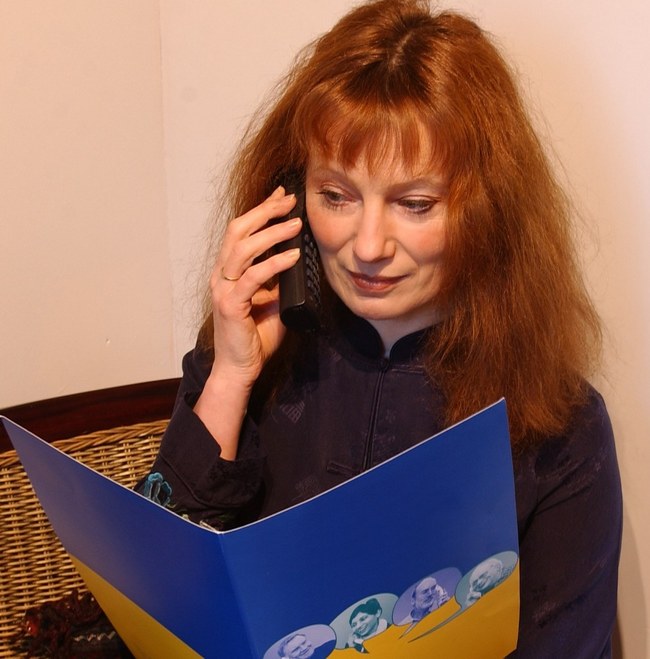
Your learning experience with ADL will not only depend on the quality of the course, but also the quality of the person teaching it. This course is taught by Iona Lister and your course fee includes unlimited tutorial support throughout. Here are Iona’s credentials:
Iona Lister Licentiate, Speech and Language Therapy, UK, Diploma in Advanced Counselling Skills.
Iona has been a clinician and manager of health services for fifteen years, and a trainer for UK-based medical charities, focusing on psychosocial issues, mental health disorders, and also the promotion of communication skills for people in helping roles. She tutors and facilitates groups via workshops and teleconferences, and now specialises in Sight Loss. As a freelance writer, she contributes regular feature articles for magazines, has written five published books, as well as published courses relating to personal development and counselling skills.
Iona has also written published books, courses and articles across a wide range of subjects, mostly in the areas of health, counselling, psychology, crafts and wildlife.
She has drawn experience from clinical and managerial experience within the NHS as well as medical and humanitarian subjects. She has been a regular feature writer and expert panel member of a national magazine for six years.
Books include: A Guide to Living with Alzheimer’s Disease (and associated dementias), The Psychology of Facial Disfigurement; a Guide for Health and Social Care Professionals, When a Medical Skin Condition Affects the Way you Look; A Guide to Managing Your Future, Facing Disfigurement with Confidence, Cross Stitch: A Guide to Creativity and Success for Beginners. Courses written include: Mental Health and Social Work, Counselling Skills, Understanding and Responding to Substance Misuse, Journalling for Personal Development, Guided Imagery, Stress Management.
Current work includes: Tutor: Courses associated with Creative Writing, Counselling Skills, Psychology, Holistic Therapy, Certified Hypnotherapist and Hypnotension Practitioner.
Facilitator of Teleconference Groups: Royal National Institute of Blind People (RNIB)
Trainer (Skills for Seeing): Macular Society
Reviewer of Books/Information: Macmillan Cancer Support
Fundraiser: Royal Society for the Protection of Birds (RSPB), Embroidery/Art Groups Facilitator, Board Member
Website Manager: The Strathcarron Project, Coordinator (Delaware & Tennessee) Human Writes
Excerpt from the Course
Although a person’s behaviour is largely influenced by their environment, there are certain characteristics that are predetermined by the person’s biological make up. Some of these characteristics are common to all people (to all human beings) while others may be specific to different people. For instance, all normal infants have a startle reflex, and all tend to be fearful of heights. Some children, however, seem to startle more easily because their neurons fire more anxiety messages. If a person’s nervous system is damaged, it might be impossible for them to name another person even though that other person is familiar to them. These are matters investigated by neurobiological psychology, which is concerned with the relationship between the person’s biology and nervous system and their psychological make up and behaviours.
The nervous system is not completely developed upon birth, but continues to develop as the body matures, and we become capable of more complex physical and psychological activities. Maturation is the process of growth development which enables a person to learn a new form of behaviour. Most maturation processes are complete in the human being before the age of twenty. The two periods which involve the most rapid maturational changes are the first five years of life, and puberty. In an infant, the cerebral cortex is incomplete, and the synapses that allow messages to pass from one nerve to another are not yet linked to the appropriate nerves. Also, the axons, which are crucial in the transmission of messages between nerves, lack the myelin sheath, an insulating sheath that allows for much more rapid transmission of messages. The lack of the myelin sheath prevents the infant from controlling the lower parts of its body. Myelination and development of synapses continues into adolescence, and perhaps even into adult hood.
STRUCTURES OF THE NERVOUS SYSTEM
The nervous system is rather like the look-out on a river boat: it monitors conditions, keeps the boat on
course, and gives warnings when something unusual or dangerous is ahead. The nervous system allows
humans to adapt to changes that can occur within the body (such as oxygen depletion after strenuous
exercise) or outside the body (such as a change in temperature). The nervous system perceives the change and takes actions to adjust. To perform such sophisticated services, the nervous system must be highly complex. This lesson provides a general overview of this remarkable system.
The nervous system can be divided into two main parts: • the central nervous system • the peripheral nervous system.
THE CENTRAL NERVOUS SYSTEM (CNS)
The CNS is made up of the brain and the spinal chord, and is responsible for processing, interpreting and storing messages, allowing the body to maintain homeostasis and respond to different stimuli. The brain and spinal cord are the two parts of the CNS.
The Brain
The coordinating and synthesising part of the central nervous system (CNS) is the brain. The brain of a
human is divided into several main areas:
• The cerebrum – the largest part of the brain, responsible for the highest kinds of mental activity as well as voluntary muscle control, interpretation of sensations, reasoning, learning and memory. In other words, the thinking part of the brain.
• The cerebellum – governs the co-ordination, adjustment and the smoothing out of movement. • The olfactory bulb – concerned with the sense of smell, which is the only sense that communicates directly the centre of emotions, the amygdala. This means that the sense of smell is closely associated with our emotions. • The thalamus – acts as a relay centre for neurons that link the spinal chord to the cerebrum. It has a
twofold function:
It acts as a channel between the sense receptors (all except smell) and the cerebellum.
It plays a role in controlling the cycle of sleep and wakefulness.
• The hypothalamus – includes the important pituitary gland, an endocrine gland whose hormones
influence body growth, reproduction, lactation, and the water balance in the kidneys. It also generally
influences the activity of cells. Its role from a psychologists viewpoint might be summarised as:
Controlling patterns of eating, drinking and sexual behaviour.
Homeostasis – An optimal level of organic function, usually maintained by a regulatory
mechanism. (i.e. the maintenance of a healthy balance of temperature, heart rate and blood
pressure).
Hormonal activity
• The medulla oblongata – also known as the brain stem. It connects the brain with the spinal chord, and a number of the cranial nerves leave the brain at this point. It contains a number of reflex centres which
control the heart beat, circulation, respiration, swallowing, and various digestive functions.
Other main parts of the brain
The reticular system – a network of neural pathways throughout the central core which is connected to the
sense receptors. It acts as a filter for all incoming information and thus plays a role in our attention,
awareness and arousal.
The limbic system – a composite of structures which surround the central core. This system acts as a seat for our drives and emotions. It aids the hypothalamus in kerbing instinctive distress, and part of this system is also involved with memory capacity.
The Spinal Cord
The spinal cord is a tissue mass inside the vertebral canal, protected by the bone of the vertebrae. It also
consists of: • Spinal nerves – 31 pairs of nerves originating from posterior and anterior roots on the spinal cord. • Spinal meninges – membranes covering the central nervous system in the spine.
Definitions:
Voluntary – Unforced or self-motivated.
Receptor – A sensory nerve ending that
responds to a particular kind of stimulus, found in
the sense organs and on the skin.
Note:
In psychology, Emotion is also
sometimes called Affect.
The spinal cord is the continuation of the medulla oblongata, and sends messages between the brain and part of the body. The cord travels down the length of the spinal column protected inside the vertebrae. It is divided into segments. Each segment gives rise to a pair of spinal nerves which travel from the spinal cord into the body through spaces in the vertebrae. In the centre of the spinal cord there is a canal filled with fluid called the cerebrospinal fluid. This fluid circulates up and down the spinal cord and into cavities of the brain. Impulses are transmitted from the tissues of the body to the brain along the spinal cord.
Reflex Actions
A reflex is an automatic (unlearned) response to a stimulus, caused by the reflex arc, the neural circuit that links the spinal to other parts of the body, permitting the body to quickly respond to stimuli. A reflex action is the response of a motor neuron to a stimulus from a sensory neuron. There are simple and complex reflex actions. Simple ones occur in the spinal cord where the motor and sensory neurones join at the reflex arc.
With more complex reflexes, the stimulus is passed along to the brain which then sends out its own stimulus or message on what action to take.
The medulla oblongata has reflex centres which control the actions of the heart, expansion and contraction of blood vessels and such actions as swallowing, vomiting, coughing and sneezing. The reflex centres in the cerebellum control movement and posture while those in the hypothalamus regulate temperature and the water balance.
THE PERIPHERAL NERVOUS SYSTEM (PNS)
The PNS consists of nerves in the head (cranial nerves), nerves from the spine (spinal nerves), a selfgoverning nervous system that deals with reflexes (the autonomic nervous system), and a system of glands that produce hormones in response to stimuli (the endocrine system). The PNS contains all the nerves outside the CNS, and is therefore crucial in receiving sensory and other stimuli and transmitting messages to different parts of the body.
Neurons
A neuron is a nerve cell capable of receiving and transmitting an impulse (message). These cells are joined to each other to form chains of neurons, some quite short and some long, along which nerve impulses travel.
Key Terms • Nucleus – The nucleus contains the nucleolus; this is the part of the cell which holds the
genetic material, the chromosomes and chromatin which are concerned with reproduction
of the cell. • Dendrites – branches of the cell that receives and carries impulses towards the cell body. • Cell body – The mass of cytoplasm containing the nucleus (i.e. close to the nucleus),
distinct from long branches of cell which extend away from the proximity of the nucleus.
• Axon – The long process of a nerve cell that conducts impulses away from the cell body.
• Myelin sheath – A covering made up of layers of lipids and proteins covering Schwann cells and oligodendrocytes around axons of many neurones. Not all neurons have myelin
sheaths.
Sensory neurons in the PNS receive messages from special receptors in the skin, muscles etc. and carry
them to the spinal cord, which sends them to the brain. An example of an impulse carried in this sort of
neuron would be the sensation registered by nerve ends in a finger when it is burnt by a flame. The impulse
is first received in the finger and then sent to the central nervous system for decoding. The impulse in a
sensory neuron begins in the nerve ends then travels along the dendron to the cell body. (A dendron is a
filament that carries an impulse to a neuron).
The impulse now passes through the axon. (An axon is a long nerve fibre that carries the impulse away from
a neuron). The impulse now moves onto the next sensory neuron on its way to the central nervous system.
Motor neurons carry messages from the brain and spinal cord to the different muscles, glands and organs,
causing them to make and appropriate response. This sort of neuron receives a stimulus from the central
nervous system that tells a muscle how to act. Continuing with the above example, when the central nervous
system has received a warning of pain from the nerve ends in the burnt finger, it sends a command back to
the finger telling it to move away from the flame. Again, the stimulus passes through the dendrites and the
cell body on its way to the axon. The stimulus is finally received by the motor end plates which are
embedded in a muscle and cause the muscle to act.
Sensory neurons conduct impulses towards the central nervous system while motor neurones conduct
impulses away. Sensory neurons are sometimes referred to as receptors (because they receive the
stimulus) while motor neurones can be termed effectors (because they effect a change).
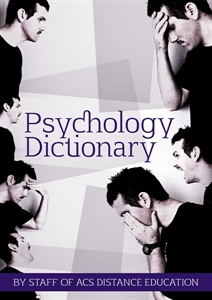
A comprehensive dictionary of psychology written by professional psychologist. An invaluable resource for students and professionals alike with its descriptions of common terms used in Psychology.
Psychology Dictinary eBook course online. Ever been confused by Psychological terminology? This book is an excellent reference tool that explains common terms used in Psychology.
This book has been developed as a reference tool for the discipline of Psychology. The Psychology Dictionary contains descriptions for common terms used in Psychology. There are many terms used in the area of Psychology alone that are explained throughout this text. Other terms have been taken from everyday language and used in a different context to describe psychological phenomena.
The Psychology Dictionary can be used to complement studies in Psychology or Counselling, as a resource for the professional, or as a reference for anyone interested in Psychology.
Assessment
Assessment is based on a combination of completing all assignments and sitting for a final short one and a half hour exam, in your own location.
If you don’t cope well with exams then you may elect to undertake a project instead. This is a popular option.
In addition, most modules have a Set Task at the end of each lesson placed before the assignment. This is an opportunity to undertake practical work to help you acquire knowledge and skills and practical experience. This ADL feature is an added bonus not found at most online schools. Set Tasks are not required for assessment.
Some courses also have optional Self-Tests which are available on our online learning platform. These are not available by correspondence or by USB, and do not form part of your overall grade.
How our courses work
Choose Your Learning Method You choose how you would like to receive your course material, i.e., Online, USB or Correspondence. The choice is yours. You may also work on online or offline.
Tutor Allocation Every student is assigned their own dedicated tutor who is an expert in their subject area. They provide as much or as little individual contact as you require. You can contact your tutor whenever you need – your hours are not limited.
Feedback and Assignments Tutor Feedback is an essential component in helping you understand the subject matter. Tutor feedback is given in the form of notes written on the assignment. We encourage you to contact your Tutor where help with clarification and understanding of course material may be required.
Your assignments are located at the end of each lesson. You submit them for marking whenever you are ready. There is no time limit.
Set Tasks and Self-Tests Most modules have a Set Task at the end of each lesson before for the assignment. This is where you get the opportunity to undertake practical work to help you acquire knowledge, skills and practical experience. Many modules also have short Self-Tests.
Exams Once all assignments have been completed you may then elect to sit for a one and half hour exam in your own location. If you prefer not to take the exam you do have the option to undertake a project instead. Once the exam or project part of the course is completed, your Certificate is then processed. Please allow approximately 4 weeks for this.
Design Your Own Qualification ADL offers students the flexibility to self-design their own qualification – bundling together a combination of 100-hour modules into a qualification higher than a certificate.
FAQ
FREQUENTLY ASKED QUESTIONS
Here is a list of the most often asked FAQ’s.
General
Q. Why should I enrol with the Academy for Distance Learning? A. Here at ADL, our students are our priority – we treat everyone as a unique individual.
Q. Do I need to buy text books? A. No, as each module has been written by highly qualified industry professionals. The content of the material is presented in such a way that text books are not required. However, if you require additional reading your tutor will be able to supply a list.
Q. What happens if I have to stop studying for a while? (eg. become sick, go on holidays, have a baby, move house, etc) A. It’s OK to take a break and start up your study at a later point in time. Just let us know.
Q. Is there an age limit? A. There is no maximum age limit. We do however, have a minimum age limit of 18 years. Below that age parental consent would be required.
Q. Are your courses up-to date? A. Our courses are revised and updated on a rotation system.
Q. Do you have a Cancellation policy? A. Yes. We have a cancellation policy that is fair and equitable. For further details please click here.
Q. Will I have any opportunity to engage with other students? A. We have a Student Community group based on facebook! If you don’t have a facebook account already, you could make one just for talking with fellow students on the group.
Enrolment
Q. When can I enrol/start? A. You may enrol and start at any time of the year – it’s all self- paced.
Q. Can I study from anywhere in the world? A. Our courses are available to anyone, anywhere in the world from the comfort of your own home. The course content is relevant to any country, culture or economy.
Q. How long do I have to complete the course? A. You complete the course at any time that is convenient for you.
Q. Completing a 100 hour module – how long will it take? A. For some students a 100 hour module will take approximately to 3- 6 months to complete. Others take less time and some even longer.
Assessment
Q. Assessment – how does it work? A. For each 100 hour module you are assessed by assignments (at the end of each lesson) and a final one and a half hour exam (or you may elect to complete a Project, instead of sitting the exam) – the choice is yours – you sit for the exam in your own location.
Q. I don’t cope well with exams – what can I do? A. You may elect to undertake a Project (set by your tutor) instead of sitting the exam. Projects are completed from your home and can usually take a couple of weeks to complete.
Q. If my assignment is not up to standard is there an opportunity to resubmit my work? A. Yes –
Q. How many assignments do I need to complete for each module? A. At the end of each lesson, there is an assignment – so if a course has say, 10 lessons, there would be 10 assignments.
Q. I am having difficulty attending workshops/industry meetings, what can be done? A. If your course requires attendance at workshops, conferences, or industry meetings; alternative arrangements can be made in your country.
Qualifications
Q. What qualification will I receive? A. For individual modules, you would be awarded a Certificate endorsed by TQUK (Training Qualifications, UK), providing you complete all assignments and the exam. If you just want to complete only the assignments and not sit for the exam or finish a Project, then a Letter of Achievement would be awarded. For more details on qualifications available please click here.
Q. Can I customize my diploma/higher qualification? A. Not all educational institution’s certificates /diplomas meet everyone’s needs. The opportunity to Design Your Own Diploma at the Academy (subject to our approval) is an added bonus, not found at other colleges. You choose modules that you think will help you in achieving your goal.
Q. What do I get when I complete the course? Will I receive a transcript? A. At the completion of all courses and providing all assignments and exam requirements have been met, you will receive your Award and a Transcript.
Tutors
Q. Our tutors – who are they? A. We appoint Tutors and require that they must be currently active in their industry, with at least 5 years’ experience in their chosen profession.
Q. Can I contact my tutor at any time? A. Yes – you have unlimited access to your tutor via email through our Online Classroom. You can always leave a message with ADL requesting your tutor to contact you. You decide on how much or how little contact you wish to have.
Q. Practical work – How is this done? A. To find out more about this part of the course please visit the section on How Our Courses Work here.
Career Options
What's Included
What your tuition fees include
All Course Material via Online, USB or Correspondence
Assignments Marked
Professional Tutor Feedback
Set Tasks - Practical Exercises to help you develop skills
Self-Tests – multiple choice questions at the end of lessons in most modules
Unlimited Personal Tutor Support – via our student classroom
Committed and Friendly Admin Support – vital to your success
All ADL Exam or Project fees (exception RHS exams)
If you require further details about any of the RHS industry recognised qualifications please, call one of our friendly RHS Course Advisors on +44 (0)1227 789 649 or email: [email protected]
Q: When can I Enrol/Start My RHS Course With ADL? A: Anytime, Anywhere. There are no enrolment deadlines.
Q: I live Overseas. Can I Study From Overseas? A: You can study any of the RHS theory qualifications overseas. All courses are offered in English. You will need to email RHS Qualifications direct to arrange sitting for your examination overseas.
Q: Is There a Time Limit for Completing an RHS Qualification? A: At present there are no time limits. However, RHS is contemplating in the future, the introduction of course time-lines.
Q: Are There Any Entry Requirements (Pre-Requisites)? A: The RHS Theory courses do not require prerequisites, previous experience or any knowledge of horticulture. You just need passion for all things horticulture.
Q: What Course Should I Start With First? I Am New To RHS Qualifications. A: We highly recommend that you start with Level 2 – Principles of Garden Planning, Establishment and Maintenance.
Q: What Does ADL Course Material Include? A: Includes Power Point Presentations, Videos and written course lessons.
RHS EXAMS
Q: When Do Exams Take Place? A: Exams are held on fixed dates in February and June of each year. You should register as a candidate at least 3 months before these dates, so please do not leave exam registration to the last minute
Q: Where Do I Take My Exams? A: UK: You take the exams at the RHS Wisley Centre, located between Cobham and Ripley in Surrey or at other authorised RHS centres around the UK. Overseas: please email RHS qualifications direct for centre information.
To speak to one of our course advisors, please enter your name and phone number below and click the "Please Call Me" button. We will call you back as soon as possible!
By submitting this form, I provide my consent to ADL to contact me via email or telephone, regarding the course I selected. All information provided is protected in conformity with our Privacy Policy.
CONTACT US
required fields are marked with *
By submitting this form, I provide my consent to ADL to contact me via email or telephone, regarding the course I selected. All information provided is protected in conformity with our Privacy Policy.




 This course is accredited by ACCPH and allows you to join as a professional member after completion. Membership allows you to add the letters MACCPH after your name (post nominals).
 Iona Lister