

Call us: +44 (0)1227 789 649 - Monday to Friday 9am to 5pm
Educational Psychology
Educational Psychology Level 3 100 Hours Certificate Course
Course Code:
BPS105
Level:
3
Start:
Anytime
Finish:
Anytime
Study From:
Anywhere
Tutor Support:
Unlimited Access
Pinterest
Twitter
Facebook
Email
LinkedIn
Facebook

Contact us
PayPal Pay Later

Pay in 3 interest-free payments
-
Choose PayPal at checkout to pay later with Pay in 3.
-
Complete your purchase with the first payment today.
-
Remaining payments are taken automatically.
Pay in 3 is a form of credit, so carefully consider whether the purchase is affordable and how you will make the repayments. Be aware of the possible impact of using Pay in 3 and of missing payments, including making other borrowing more difficult or more expensive. Pay in 3 eligibility is subject to status and approval. 18+ UK residents only. Available for purchases of £30 to £2,000. Terms and conditions apply. PayPal Pay in 3 is a trading name of PayPal (Europe) S.à r.l. et Cie, S.C.A. 22-24 Boulevard Royal L-2449, Luxembourg.
Learn About Educational Psychology
Educational Psychology course online.
Learn about the psychology of teaching and learning. Understand how and why people learn, and how to apply that understanding to bring about changes in people of all ages.
This Level 3 course will benefit a wide range of people, from parents (understanding of how their children develop) to teachers/trainers and welfare workers or leisure professionals (e.g. youth leaders).
Educational Psychology course online has been viewed by the following organisations as an appropriate course for providing a foundation in Educational Psychology.
 TQUK (Training Qualifications UK – an Ofqual Awarding Organisation
 TQUK (Training Qualifications UK
ADL- Academy for Distance Learning, is an endorsed Training Qualifications UK (TQUK) centre. Our Approval Centre number is: 1709318
 This course is accredited by ACCPH and allows you to join as a professional member after completion. Membership allows you to add the letters MACCPH after your name (post-nominals).
CMA – Complementary Medical Association
The Complementary Medical Association is a non-profit organisation dedicated to promoting the very highest standards of complementary medicine and natural healthcare.
ADL is a CMA Registred Training School, registration No. ADL270511.
Membership of The CMA demonstrates our commitment to excellence and professionalism. The Complementary Medical Association is the world’s leading body for elite complementary medical professionals.

Course Information
Other Categories
Lessons
Lesson Structure: Educational Psychology BPS105
- Introduction – Development & Learning Theory
- Piagete’s Theory of Cognitive Development
- Schemes
- Assimilation and Accommodation
- Equilibration
- Piaget’s Stages of Development.
- Behavioural Learning
- The Evolution of Behavioural Theories of Learning
- Thorndike’s Theory of the Law of Effect
- Skinner’s Theory of Operant Conditioning
- Principles of Behavioural Learning; Reinforcers
- Positive and Negative Reinforcement
- The Premack Principle
- Information Processing
- Information Processing Theory
- A Model of Information Processing
- Perception
- Gestalt Psychology
- Attention
- Short-Term Memory
- Long-Term Memory
- Division of Long-Term Memory
- Memory Retention & Loss
- Remembering and Forgetting
- Interference
- Inhibition and Facilitation
- Primacy and Recency
- Learning Strategies
- Individual Needs
- Effective Instruction
- The QAIT Model
- Quality of Instruction
- Appropriate Levels of Instruction
- Incentive;Time
- Between-Class Ability Grouping
- Within Class Ability Grouping
- Effective Use of Ability Groups
- Mastery Learning
- Outcomes-Based Education
- Individualised Instruction
- Constructivist Learning
- What is the Constructivist View
- Top Down or Bottom Up Processing
- Generative Learning
- Discovery Learning
- Reception Learning
- Activating Prior Knowledge
- Motivation
- Intrinsic Motivation
- Extrinsic Motivation
- Factors Affecting Motivation
- Motivational Theories
- Behavioural Learning Theory
- Human Needs Theory; Dissonance Theory
- Cognitive Dissonance Theory
- Personality Theory
- Attribution Theory Expectancy Theory;
- Improving Motivation
- Nurturing Interest/Curiosity
- Providing Incentive to Learn
Learning Goals
Learning Goals: Educational Psychology BPS105
- Discuss theories of development and learning.
- Explain behavioural theories of learning
- Describe how Information Processing Model Works
- Describe processes involved in memory loss and retention
- Describe different methods of effective instruction to cater for individual needs.
- Explain the relevance of constructivist learning in education
- Differentiate definitions of motivation and the application of motivation to learning
Practical (Set Tasks)
Practicals:
- Describe Piaget’s theory of stages of development
- Observe the behaviour of children in the following age groups (0-2yrs, 2-7yrs, 7-11yrs, 11-18yrs) and note down differences in the way they interact with one another.
- Interview two adults who have one or more children over the age of 5 years
- Ask them what they think about using punishment in raising children.
- Ask them if, when and where punishment might be used: how it should be used, and what results can be expected by using it in those situations.
- Make notes of what they say.
- Consider how much (if any) of their comment might be influenced by their own behavioural conditioning; and how much by reason.
- Why would one person in a classroom forget something that others remember; and remember different things that others forget?
Examinations
Program Summary
More Information
Your learning experience with ADL will not only depend on the quality of the course, but also the quality of the person teaching it. This course is taught by Iona Lister and your course fee includes unlimited tutorial support throughout. Here are Iona’s credentials:
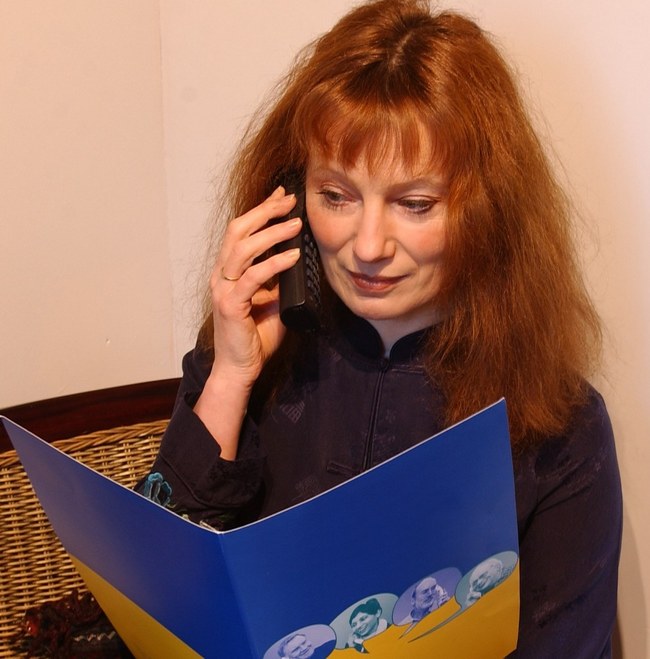 Iona Lister
Licentiate, Speech and Language Therapy, UK, Diploma in Advanced Counselling Skills.
Iona has been a clinician and manager of health services for fifteen years, and a trainer for UK-based medical charities, focusing on psychosocial issues, mental health disorders, and also the promotion of communication skills for people in helping roles. She tutors and facilitates groups via workshops and teleconferences, and now specialises in Sight Loss. As a freelance writer, she contributes regular feature articles for magazines, has written five published books, as well as published courses relating to personal development and counselling skills.
Iona has also written published books, courses and articles across a wide range of subjects, mostly in the areas of health, counselling, psychology, crafts and wildlife.
She has drawn experience from clinical and managerial experience within the NHS as well as medical and humanitarian subjects. She has been a regular feature writer and expert panel member of a national magazine for six years.
Books include: A Guide to Living with Alzheimer’s Disease (and associated dementias), The Psychology of Facial Disfigurement; a Guide for Health and Social Care Professionals, When a Medical Skin Condition Affects the Way you Look; A Guide to Managing Your Future, Facing Disfigurement with Confidence, Cross Stitch: A Guide to Creativity and Success for Beginners.
Courses written include: Mental Health and Social Work, Counselling Skills, Understanding and Responding to Substance Misuse, Journalling for Personal Development, Guided Imagery, Stress Management.
Current work includes: Tutor: Courses associated with Creative Writing, Counselling Skills, Psychology, Holistic Therapy, Certified Hypnotherapist and Hypnotension Practitioner.
Facilitator of Teleconference Groups: Royal National Institute of Blind People (RNIB)
Trainer (Skills for Seeing): Macular Society
Reviewer of Books/Information: Macmillan Cancer Support
Fundraiser: Royal Society for the Protection of Birds (RSPB), Embroidery/Art Groups Facilitator, Board Member
Website Manager: The Strathcarron Project, Coordinator (Delaware & Tennessee) Human Writes
Excerpt from the Course
LEARNING AND MEMORY
One important aspect of learning is memory. If we did not remember past experiences, conditioning would most likely not work. For cognitive psychologists, conditioning works only because we process information and recall it, and use it to decide on appropriate responses at other times. Cognitive psychologists also emphasise the individual’s control over learning through the intention applications of memory. To understand how memory can be applied consciously to improve learning, let us examine the multi-store model of memory.
According to the model, there are three parts to memory:
- 1. sensory or iconic memory (SM – which is really a registering of information before we have a chance to think about it)
- 2. short term memory (STM – where information that we attend to is briefly stored – for a few seconds)
- 3. long term memory (LTM – which stores information that has been consciously or unconsciously reinforced for much longer periods, perhaps for our lifetime).
Memory is supposedly stored in a process that moves the information from part 1 to part 2 to part 3. The main factors in the transferral of information from sensory to short term memory are attention and time. Information that is not quickly transferred to the STM is lost. The SM can hold large amounts of information, and most of it is lost in this way because we have not attended to it quickly enough. (Actually, we could not attend to it all anyway, so we usually perceive only that which is relevant in some way to us at that time.)
Attentiveness to information registered in the SM can be voluntary or involuntary or automatic. Information is more likely to be registered if it is found meaningful (not necessarily to the teacher, but to the person doing the thinking). For instance, information may enter our STM if it evokes some emotion in us, or if we attach some significance or meaning to it (e.g. possible danger, possible benefit), or if we focus on that information for any period of time (e.g. a few seconds).
To ensure that information is stored in STM, we must pay attention to it (tell ourselves that this is important, be interested or curious) and attend to it long enough for it to enter the STM. Teachers can help by:
- getting students’ attention before presenting information (e.g. “This… will be on the test”),
- presenting information in more than one way (e.g. verbally and in images),
- changing their voice tone or volume at very important parts,
- alerting students beforehand to the important parts, identifying key words (perhaps on the board), and
- breaking large amounts into smaller bits and allowing these to be processed before moving on to the next parts (e.g. summarising a passage in one sentence).
Students can focus their attention on material being studied by:
- highlighting key words and phrases,
- visualising,
- making immediate sense of information (e.g. brain stem = survival ),
- and by summarising small sections of material to get the main points before moving onto the next sections.
Information in the STM that is consciously processed is more likely to be transferred to the long term memory. This processing can be emotional, intellectual, or active. For instance, if we feel strongly about the information, or relate it to what we know, or use language to name it, it is more likely to be stored in our LTM. Again, attention is a key factor. And again, too much information will result in loss of some of it.
Teachers should encourage students to attend to the information long enough for it to be transferred to LTM by:
- discussing it,
- giving real-life examples,
- asking for examples from students’ experience,
- asking for opinions on it etc.
They can also reinforce it using any of the means described earlier. Other key strategies include rehearsing (repeating key words and phrases), summarising, paraphrasing, and breaking it into manageable chunks. A very useful tool here is mapping. The teacher and students can create diagrams of processes or showing relationships, using colours, shapes, arrows etc. Students should be encouraged to make their own. Similar maps can be very helpful in relating new information to other information, or showing where it fits into the topic. If these diagrams or maps contain all key information, they provide visual as well as verbal cues for later recall. Other organising strategies work also e.g. using certain colours or shapes for particular information.
Memory improvement strategies
To remember something for more than a few seconds, you need to transfer the information from the short term to the long term memory. The following have been found to be important methods for memory improvement:
- rehearsal
- semantic organization
- elaboration
- retrieval processes.
Rehearsal – Repeating information over and over again to remember it.
Semantic organization – Semantic organization is the encoding or process of information in our long term memory, based on its meaning, for example, lining all words related to animals together. Rehearsal can be simply called mimicry or imitation. However, semantic organization is thought to add recall and improve memory.
You have two groups of words:
Group 1 shoe, boat, cat, pea, cup
Group 2 spoon, fork, knife, plate, cup
The second group of words will probably be easier to recall as the words are semantically similar – i.e. they have similar meanings and fall into a general classification of tableware. However, semantic organization is more difficult to use.
Elaboration – Elaboration involves the linking of two words/things together to aid memory. Eg. The Japanese word for one is pronounced ‘itch’, and number two is ‘knee’. By imagining an itchy knee, people might be encouraged to remember the two words…………………………………………………….
EBook to compliment this Course
How Children Think EBook
Learn to appreciate and work with the growing mind of infants. This guide teaches and enlightens on the development of young minds, the effects of nature and nature and the changing problems that can develop. Written for parents, students and anyone working with children.
 How Children Think
 How Children Think
by the Staff of ACS Distance Learning
How Children Think eBook course online. Anyone who has ever tried to make a child do anything (clean up their mess, desist from throwing mud, stop drawing on the walls) knows that children think differently to adults. This book attempts to provide the skills and knowledge to develop a greater understanding of children.
How do children think? Children are on a constant path of development from conception to adulthood (and beyond). Understanding children from a psychological perspective can be of great assistance to adults, in order to help them support the children in their lives to develop into highly functioning adults – whether their own children, or in a professional or social environment.
This ebook attempts to provide the skills and knowledge to develop a greater understanding of children, and what is really going on for them. The first chapter discusses developmental stages in a child’s life, which is important for understanding what is to be expected and accepted at different points of a child’s development.
The next few chapters initiate the age-old discussion on the effects of nature and nurture on development. Chapter four provides insights into the importance of creating balance in a child’s life and chapter five discusses ways to change undesirable behaviour, providing practical solutions. Chapter six takes this a step further, going into problems and solutions of behaviour modification, as well as discussing issues such as abuse, bullying and deprivation.
The book concludes with a discussion on keeping up to date with constantly evolving research.
This book will provide valuable clues into the way children think, and useful keys to support development. We hope you enjoy it.
Assessment
Assessment is based on a combination of completing all assignments and sitting for a final short one and a half hour exam, in your own location.
If you don’t cope well with exams then you may elect to undertake a project instead. This is a popular option.
In addition, most modules have a Set Task at the end of each lesson placed before the assignment. This is an opportunity to undertake practical work to help you acquire knowledge and skills and practical experience. This ADL feature is an added bonus not found at most online schools. Set Tasks are not required for assessment.
Some courses also have optional Self-Tests which are available on our online learning platform. These are not available by correspondence or by USB, and do not form part of your overall grade.
How our courses work
- Choose Your Learning Method
You choose how you would like to receive your course material, i.e., Online, USB or Correspondence. The choice is yours. You may also work on online or offline. - Tutor Allocation
Every student is assigned their own dedicated tutor who is an expert in their subject area. They provide as much or as little individual contact as you require. You can contact your tutor whenever you need – your hours are not limited. - Feedback and Assignments
Tutor Feedback is an essential component in helping you understand the subject matter. Tutor feedback is given in the form of notes written on the assignment. We encourage you to contact your Tutor where help with clarification and understanding of course material may be required.
Your assignments are located at the end of each lesson. You submit them for marking whenever you are ready. There is no time limit. - Set Tasks and Self-Tests
Most modules have a Set Task at the end of each lesson before for the assignment. This is where you get the opportunity to undertake practical work to help you acquire knowledge, skills and practical experience. Many modules also have short Self-Tests. - Exams
Once all assignments have been completed you may then elect to sit for a one and half hour exam in your own location. If you prefer not to take the exam you do have the option to undertake a project instead.
Once the exam or project part of the course is completed, your Certificate is then processed. Please allow approximately 4 weeks for this. - Design Your Own Qualification
ADL offers students the flexibility to self-design their own qualification – bundling together a combination of 100-hour modules into a qualification higher than a certificate.
FAQ
FREQUENTLY ASKED QUESTIONS
Here is a list of the most often asked FAQ’s.
General
Q. Why should I enrol with the Academy for Distance Learning?
A. Here at ADL, our students are our priority – we treat everyone as a unique individual.
Q. Do I need to buy text books?
A. No, as each module has been written by highly qualified industry professionals. The content of the material is presented in such a way that text books are not required. However, if you require additional reading your tutor will be able to supply a list.
Q. What happens if I have to stop studying for a while? (eg. become sick, go on holidays, have a baby, move house, etc)
A. It’s OK to take a break and start up your study at a later point in time. Just let us know.
Q. Is there an age limit?
A. There is no maximum age limit. We do however, have a minimum age limit of 18 years. Below that age parental consent would be required.
Q. Are your courses up-to date?
A. Our courses are revised and updated on a rotation system.
Q. Do you have a Cancellation policy?
A. Yes. We have a cancellation policy that is fair and equitable. For further details please click here.
Q. Will I have any opportunity to engage with other students?
A. We have a Student Community group based on facebook! If you don’t have a facebook account already, you could make one just for talking with fellow students on the group.
Enrolment
Q. When can I enrol/start?
A. You may enrol and start at any time of the year – it’s all self- paced.
Q. Can I study from anywhere in the world?
A. Our courses are available to anyone, anywhere in the world from the comfort of your own home. The course content is relevant to any country, culture or economy.
Q. How long do I have to complete the course?
A. You complete the course at any time that is convenient for you.
Q. Completing a 100 hour module – how long will it take?
A. For some students a 100 hour module will take approximately to 3- 6 months to complete. Others take less time and some even longer.
Assessment
Q. Assessment – how does it work?
A. For each 100 hour module you are assessed by assignments (at the end of each lesson) and a final one and a half hour exam (or you may elect to complete a Project, instead of sitting the exam) – the choice is yours – you sit for the exam in your own location.
Q. I don’t cope well with exams – what can I do?
A. You may elect to undertake a Project (set by your tutor) instead of sitting the exam. Projects are completed from your home and can usually take a couple of weeks to complete.
Q. If my assignment is not up to standard is there an opportunity to resubmit my work?
A. Yes –
Q. How many assignments do I need to complete for each module?
A. At the end of each lesson, there is an assignment – so if a course has say, 10 lessons, there would be 10 assignments.
Q. I am having difficulty attending workshops/industry meetings, what can be done?
A. If your course requires attendance at workshops, conferences, or industry meetings; alternative arrangements can be made in your country.
Qualifications
Q. What qualification will I receive?
A. For individual modules, you would be awarded a Certificate endorsed by TQUK (Training Qualifications, UK), providing you complete all assignments and the exam. If you just want to complete only the assignments and not sit for the exam or finish a Project, then a Letter of Achievement would be awarded. For more details on qualifications available please click here.
Q. Can I customize my diploma/higher qualification?
A. Not all educational institution’s certificates /diplomas meet everyone’s needs. The opportunity to Design Your Own Diploma at the Academy (subject to our approval) is an added bonus, not found at other colleges. You choose modules that you think will help you in achieving your goal.
Q. What do I get when I complete the course? Will I receive a transcript?
A. At the completion of all courses and providing all assignments and exam requirements have been met, you will receive your Award and a Transcript.
Tutors
Q. Our tutors – who are they?
A. We appoint Tutors and require that they must be currently active in their industry, with at least 5 years’ experience in their chosen profession.
Q. Can I contact my tutor at any time?
A. Yes – you have unlimited access to your tutor via email through our Online Classroom. You can always leave a message with ADL requesting your tutor to contact you. You decide on how much or how little contact you wish to have.
Q. Practical work – How is this done?
A. To find out more about this part of the course please visit the section on How Our Courses Work here.
Career Options
What's Included
What your tuition fees include
- All Course Material via Online, USB or Correspondence
- Assignments Marked
- Professional Tutor Feedback
- Set Tasks - Practical Exercises to help you develop skills
- Self-Tests – multiple choice questions at the end of lessons in most modules
- Unlimited Personal Tutor Support – via our student classroom
- Committed and Friendly Admin Support – vital to your success
- All ADL Exam or Project fees (exception RHS exams)
- Qualification Certificate
- Official Transcript with assignment grades
- Student Manual
Plus FREE
- Academic Writing course (optional - 10 hours only)
- Critical Thinking course (optional - 10 hours only)
- Job Seekers Careers Guide
- Study Tips on How To Study Better
- Career Counselling by ADL Staff
- CV Writing Help, Tips and Advice
There are no hidden extras
Career Opportunities
FAQ - RHS Theory Qualifications
GENERAL
If you require further details about any of the RHS industry recognised qualifications please, call one of our friendly RHS Course Advisors on +44 (0)1227 789 649 or email: [email protected]
Q: When can I Enrol/Start My RHS Course With ADL?
A: Anytime, Anywhere. There are no enrolment deadlines.
Q: I live Overseas. Can I Study From Overseas?
A: You can study any of the RHS theory qualifications overseas. All courses are offered in English. You will need to email RHS Qualifications direct to arrange sitting for your examination overseas.
Q: Is There a Time Limit for Completing an RHS Qualification?
A: At present there are no time limits. However, RHS is contemplating in the future, the introduction of course time-lines.
Q: Are There Any Entry Requirements (Pre-Requisites)?
A: The RHS Theory courses do not require prerequisites, previous experience or any knowledge of horticulture. You just need passion for all things horticulture.
Q: What Course Should I Start With First? I Am New To RHS Qualifications.
A: We highly recommend that you start with Level 2 – Principles of Garden Planning, Establishment and Maintenance.
Q: What Does ADL Course Material Include?
A: Includes Power Point Presentations, Videos and written course lessons.
RHS EXAMS
Q: When Do Exams Take Place?
A: Exams are held on fixed dates in February and June of each year. You should register as a candidate at least 3 months before these dates, so please do not leave exam registration to the last minute
Q: Where Do I Take My Exams?
A: UK: You take the exams at the RHS Wisley Centre, located between Cobham and Ripley in Surrey or at other authorised RHS centres around the UK.
Overseas: please email RHS qualifications direct for centre information.
Q: Exam Pass Marks?
A: Module – pass 50%. Commendation 70%.
Qualification: 50% pass for all modules.
Commendation awarded for all modules.
Each question carries a value of 10 marks.
Q: I’m Not Happy With My Exam Results?
A: You have the opportunity to re-sit your exam at the next opportunity.
There are no restrictions on the number of re-sits you can take. The highest mark you achieve will remain.,