

Call us: +44 (0)1227 789 649 - Monday to Friday 9am to 5pm
Soil and Water Chemistry
Soil and Water Chemistry 100 Hours Certificate Course
Course Code:
BSC307
Level:
3
Start:
Anytime
Finish:
Anytime
Study From:
Anywhere
Tutor Support:
Unlimited Access
Pinterest
Twitter
Facebook
Email
LinkedIn
Facebook

Contact us
PayPal Pay Later

Pay in 3 interest-free payments
-
Choose PayPal at checkout to pay later with Pay in 3.
-
Complete your purchase with the first payment today.
-
Remaining payments are taken automatically.
Pay in 3 is a form of credit, so carefully consider whether the purchase is affordable and how you will make the repayments. Be aware of the possible impact of using Pay in 3 and of missing payments, including making other borrowing more difficult or more expensive. Pay in 3 eligibility is subject to status and approval. 18+ UK residents only. Available for purchases of £30 to £2,000. Terms and conditions apply. PayPal Pay in 3 is a trading name of PayPal (Europe) S.à r.l. et Cie, S.C.A. 22-24 Boulevard Royal L-2449, Luxembourg.
Learn About Soil and Water Chemistry
Soil and Water Chemistry Course Online
Learn about soil and water chemistry in different situations and how it is applied in agriculture, environmental management and health.
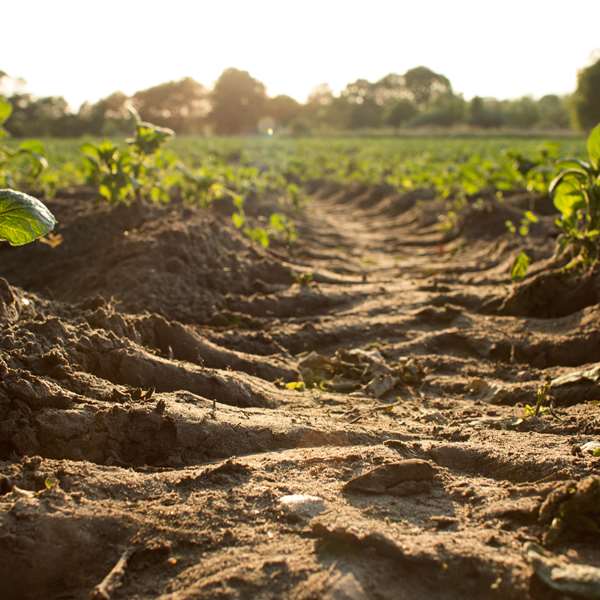
Soil is a combination of mineral and organic matter, water and air. It is created by external processes that break rock into fine particles. Without these processes, Earth would not be able to support plant life, or us. About ½ of the total volume of good soil is a mixture of disintegrated and decomposed rock (mineral matter) and humus, the decomposed remains of animals and plants (organic matter). The remaining half is space where air and water circulate. The nature of soil in any given environment depends upon its parent material, time, climate, plants and animals, and slope.
The chemistry of the soil is affected by a number of things, including environmental or ecological factors such as sunlight, temperature plus the pH of the soil itself, its mineral make up, plus organic material. For environmentalists working with soil, it is important to be able to learn how contaminants are first introduced and what problems they can cause. Adsorption, desorption, precipitation, dissolution and other reactions can occur to either increase or decrease soil toxicity.
Water comes in three states: in liquid form, in steam, or as ice. It is a chemically active inorganic polar compound made from two atoms of hydrogen and one of oxygen bonded together, also known as H₂O. Water can react with metals and metal oxides to form ‘bases’, with non-metal oxides to form ‘acids’, and with specific organic compounds to form alcohols.
All around the earth and atmosphere, water is known to serve as a temperature regulator: in the form of ice it creates a cooling effect, in the form of steam it creates a heating effect. By being the main component of our large bodies of water, such as oceans and lakes, it also helps balance our global climate. Pure water is an excellent solvent yet poor conductor of electricity, however, there are various forms of water which can make them good electrical conductors, such as presence of minerals and dissolved ions, among others.
In this expertly designed course, you will gain an in-depth knowledge of both soil and water chemistry and is ideal for anyone seeking to work in or already working in environmental related industries.
Course Information
Other Categories
Lessons
Lesson Structure: Soil and Water Chemistry BSC307
There are 10 Lessons:
1 Soil Chemistry: An Introduction
- Introduction
- Chemistry Revision
- Useful Chemical Terms
- Atoms
- Elements and Compounds
- Chemical formulae
- Bonds
- Parts of a Compound
- Inorganic, Organic and Biochemistry
- Other Common Biochemical Groups
- Chemical Names
- Arrangement of Atoms in a Compound
- Basic Chemical Reactions
- Calculating the Components of a Chemical
- Soil Redox Reactions
- Biogeochemistry and Soil Structure Review
- Pedosphere
- The Hydrological Cycle
- The Carbon Cycle
- The Nitrogen Cycle
- Mineralisation
- Chemoautotrophic Organisms
- Immobilisation
- Ammonium Fixation
- The Urea Cycle
- Soil Adsorption/Desorption
2 Soil Chemical Processes
- Introduction: How Soils Develop
- Soil profile
- Factors of Soil Formation in More Detail
- Weathering Processes of Soil Formation
- Physical Weathering
- Chemical Weathering
- Geochemical weathering
- Pedochemical Weathering
- Soil Profile Description
- The Features of Different Horizons
- Soil Classification and Description
- Great Soil Groups in Order of Degree of Profile Development and Degree of Leaching
- Key Properties of a Selection of Different Soil Groups
- Range of Soils Found on Parent Materials
- Northcote System
- Classification of British Soils
- Soils Types and Plant Growth
- Properties of Soils
- Physical and Chemical Properties of Soil
- Assessing the Soil
- Soil Characteristic Changes
- Texture and its Effect on Plant Growth
- Structure and its Effect on Plant Growth
- Consistence and its Effect on Plant Growth
- Depth of Profile and how it relates to Plant Growth
- Porosity and how it relates to Plant Growth
- pH and Its Effect on Plant Growth
- Adjusting the pH
- Use of Liming Materials to Raise pH
- Cation Exchange Capacity
- Soil Humus
- Carbon/Nitrogen Ratio
- Chemical Terms Revision
3 Soil-Chemical Testing
- Introduction
- Obtaining soil samples for testing
- Do’s and Don’ts of Soil Sampling
- Common Soil Tests
- Texture
- Structure
- pH
- Soil testing for nutrient analysis
- Tissue Analysis
- Other Soil Cations
- Potassium (K)
- Magnesium (Mg)
- Calcium (Ca)
- Sodium (Na)
- The CEC in Soils
- Cation Exchange Capacity (CEC) (me (meq)/100 g or cmol(+)/kg)
- Soil micronutrients
- Suggested Reading/Revision
4 Soil Chemistry – Applications in Agriculture
- Introduction
- Components of Soil Fertility
- Nutrient Pools
- Farm Chemicals
- Suggested Reading
5 Soil Chemistry – Applications in Environmental Management
- Introduction
- Soil Pollutants
- Sewage Sludge Use
- Redox Reactions
- Soil Remediation
6 Water Chemistry — Introduction
- Water: Chemical and Physical Properties
- Hydrological Cycle
- Evaporation
- Precipitation
- Condensation
- Percolation
- Infiltration
- Interception
- Transpiration
- Runoff
- Storage
- Water Resources
- Basic Outlook between Surface Water and Groundwater
- Seawater
- Fresh Water
- Brackish Water
- Water Footprint
- Drought and Impact
7 Water – Chemistry of Water Sources and Drinking Water
- Water Sources and Theie Chemical Composition
- Chemistry of Seawater
- Chemistry of Groundwater
- Chemistry of Surface Water
- Chemistry of Potable Drinking Water
8 Water – Chemical Testing
- Introduction
- Water pH
- Testing pH
- Electrical Conductivity (EC)
- Testing EC
- Total Alkalinity
- Testing Total Alkalinity
- Total Hardness
- Obtaining Ca2+ and Mg2+ Concentrations
- Water Analysis
- Calculating Total Hardness
9 Water Chemistry
Human and Environmental Applications
10 Water Chemistry
- Applications in Agriculture, Problem-Based Learning Project
Learning Goals
Learning Goals: Soil and Water Chemistry BSC307
Soil Chemistry Section:
- Describe the dominant geochemical cycles on earth. Demonstrate an understanding of basic chemistry including atoms and their components, elements, compounds and chemical reactions.
- Explain the important chemical reactions occurring in soil and their consequences; differentiate between different soil fractions with respect to their nature, size and chemical activity.
- Describe different soil test methods and explain how the test results are used.
- Explore components of soil fertility.
- Describe soil chemistry/fertility factors affecting crop growth in different farming environments.
- Explain ways of improving soil fertility for crop production.
- Discuss the impact of chemically altering soil vs. cycling and other natural methods.
- Describe inorganic and organic soil pollutants.
- Discuss effects on health and the environment.
- Discuss ways to remediate soils.
Water Chemistry Section:
- Outline the components of the earth’s water cycle.
- Describe the main chemical properties of water.
- Explain the various ways in which water is classified.
- Explain the chemistry of different water sources, giving examples of different properties and reactions.
- Describe different water test methods and explain how the test results are used.
Practical (Set Tasks)
Examinations
Program Summary
More Information
Soils are affected by a multitude of factors. The simplest “external” factors affecting soils are contaminants and pollutants. Contaminants are usually considered things added by humans, things that have been introduced to the environment or soil environment. Pollutants may be the result of human intervention, or naturally occurring. This means a contaminant is always a pollutant, but a pollutant is not always a contaminant.
Managing these external factors is an important part of keeping soil healthy and productive. The presence of contaminants and pollutants can seriously impact plant growth, or replanting. It can also affect human and livestock health through accumulation in the plant. In smaller amounts, this may be of a little issue. In many cases, however, biomagnification can make a seemingly harmless amount of pollutant quite dangerous.
SOIL POLLUTANTS
There are a wide range of different pollutants that can contaminate the chemistry of soils, both inorganic and organic chemicals, from a wide variety of sources including pesticides, industrial wastes, and the results of all types of other human activity.
A useful way of describing contaminated soils was proposed by R.F. Isbell in 1996, as follows:
- Cumulic Soils – Soils where man-made materials have been deposited. (e.g. shell midden)
- Hortic Soils – Soils which have had compost, manure or other organic materials incorporated into the surface layers.
- Garbic Soils – Soils used to bury landfill waste with high levels of organic matter, which commonly develops methane or land fill gasses.
- Urbic Soils – Soils used to bury landfill waste with low levels of organic matter, that does not develop land fill gasses. These are commonly called “brownfill” sites.
- Dredgic Soils – Soils with large amounts of mineral materials dredged from bodies of water, or tailings ponds from mining.
- Spolic Soils – Soils created on mineral materials from land disturbed by construction or mining.
- Scalpic Soils – Soils that result from scalping (removing) surface and near surface layers of the ground. (e.g. when levelling or terracing ground for housing, industrial or even agricultural development)
More specifically contaminated soils may include:
- Inorganic Contaminants (e.g. Arsenic, Barium, Beryllium, Cadmium, Chromium, Copper, Lead, Manganese, Mercury, Nickel and Zinc)
- Organic contaminants (e.g. B-tex, Total recoverable hydrocarbons, Polychlorinated dibenzo-p-dioxins(PCDD), Polychlorinated biphenyls (PCBs), Polycyclic aromatic hydrocarbons (PAHs), Cyanides, and Chlorinated pesticides (e.g. Aldrin, Dieldrin, Heptachlor, Chlordane, DDT)
The existence of contaminants in any locality is greatly influenced by both historic and current land use and treatment of soil. Where soils are more freely draining, or are cultivated to a certain depth, the concentration of pollutants may be diluted; in undisturbed soils with high colloid or clay content, pollutants may be held in the soil, close to the surface in much higher concentrations for much longer periods.
Assessment
Assessment is based on a combination of completing all assignments and sitting for a final short one and a half hour exam, in your own location.
If you don’t cope well with exams then you may elect to undertake a project instead. This is a popular option.
In addition, most modules have a Set Task at the end of each lesson placed before the assignment. This is an opportunity to undertake practical work to help you acquire knowledge and skills and practical experience. This ADL feature is an added bonus not found at most online schools. Set Tasks are not required for assessment.
Some courses also have optional Self-Tests which are available on our online learning platform. These are not available by correspondence or by USB, and do not form part of your overall grade.
How our courses work
- Choose Your Learning Method
You choose how you would like to receive your course material, i.e., Online, USB or Correspondence. The choice is yours. You may also work on online or offline. - Tutor Allocation
Every student is assigned their own dedicated tutor who is an expert in their subject area. They provide as much or as little individual contact as you require. You can contact your tutor whenever you need – your hours are not limited. - Feedback and Assignments
Tutor Feedback is an essential component in helping you understand the subject matter. Tutor feedback is given in the form of notes written on the assignment. We encourage you to contact your Tutor where help with clarification and understanding of course material may be required.
Your assignments are located at the end of each lesson. You submit them for marking whenever you are ready. There is no time limit. - Set Tasks and Self-Tests
Most modules have a Set Task at the end of each lesson before for the assignment. This is where you get the opportunity to undertake practical work to help you acquire knowledge, skills and practical experience. Many modules also have short Self-Tests. - Exams
Once all assignments have been completed you may then elect to sit for a one and half hour exam in your own location. If you prefer not to take the exam you do have the option to undertake a project instead.
Once the exam or project part of the course is completed, your Certificate is then processed. Please allow approximately 4 weeks for this. - Design Your Own Qualification
ADL offers students the flexibility to self-design their own qualification – bundling together a combination of 100-hour modules into a qualification higher than a certificate.
FAQ
FREQUENTLY ASKED QUESTIONS
Here is a list of the most often asked FAQ’s.
General
Q. Why should I enrol with the Academy for Distance Learning?
A. Here at ADL, our students are our priority – we treat everyone as a unique individual.
Q. Do I need to buy text books?
A. No, as each module has been written by highly qualified industry professionals. The content of the material is presented in such a way that text books are not required. However, if you require additional reading your tutor will be able to supply a list.
Q. What happens if I have to stop studying for a while? (eg. become sick, go on holidays, have a baby, move house, etc)
A. It’s OK to take a break and start up your study at a later point in time. Just let us know.
Q. Is there an age limit?
A. There is no maximum age limit. We do however, have a minimum age limit of 18 years. Below that age parental consent would be required.
Q. Are your courses up-to date?
A. Our courses are revised and updated on a rotation system.
Q. Do you have a Cancellation policy?
A. Yes. We have a cancellation policy that is fair and equitable. For further details please click here.
Q. Will I have any opportunity to engage with other students?
A. We have a Student Community group based on facebook! If you don’t have a facebook account already, you could make one just for talking with fellow students on the group.
Enrolment
Q. When can I enrol/start?
A. You may enrol and start at any time of the year – it’s all self- paced.
Q. Can I study from anywhere in the world?
A. Our courses are available to anyone, anywhere in the world from the comfort of your own home. The course content is relevant to any country, culture or economy.
Q. How long do I have to complete the course?
A. You complete the course at any time that is convenient for you.
Q. Completing a 100 hour module – how long will it take?
A. For some students a 100 hour module will take approximately to 3- 6 months to complete. Others take less time and some even longer.
Assessment
Q. Assessment – how does it work?
A. For each 100 hour module you are assessed by assignments (at the end of each lesson) and a final one and a half hour exam (or you may elect to complete a Project, instead of sitting the exam) – the choice is yours – you sit for the exam in your own location.
Q. I don’t cope well with exams – what can I do?
A. You may elect to undertake a Project (set by your tutor) instead of sitting the exam. Projects are completed from your home and can usually take a couple of weeks to complete.
Q. If my assignment is not up to standard is there an opportunity to resubmit my work?
A. Yes –
Q. How many assignments do I need to complete for each module?
A. At the end of each lesson, there is an assignment – so if a course has say, 10 lessons, there would be 10 assignments.
Q. I am having difficulty attending workshops/industry meetings, what can be done?
A. If your course requires attendance at workshops, conferences, or industry meetings; alternative arrangements can be made in your country.
Qualifications
Q. What qualification will I receive?
A. For individual modules, you would be awarded a Certificate endorsed by TQUK (Training Qualifications, UK), providing you complete all assignments and the exam. If you just want to complete only the assignments and not sit for the exam or finish a Project, then a Letter of Achievement would be awarded. For more details on qualifications available please click here.
Q. Can I customize my diploma/higher qualification?
A. Not all educational institution’s certificates /diplomas meet everyone’s needs. The opportunity to Design Your Own Diploma at the Academy (subject to our approval) is an added bonus, not found at other colleges. You choose modules that you think will help you in achieving your goal.
Q. What do I get when I complete the course? Will I receive a transcript?
A. At the completion of all courses and providing all assignments and exam requirements have been met, you will receive your Award and a Transcript.
Tutors
Q. Our tutors – who are they?
A. We appoint Tutors and require that they must be currently active in their industry, with at least 5 years’ experience in their chosen profession.
Q. Can I contact my tutor at any time?
A. Yes – you have unlimited access to your tutor via email through our Online Classroom. You can always leave a message with ADL requesting your tutor to contact you. You decide on how much or how little contact you wish to have.
Q. Practical work – How is this done?
A. To find out more about this part of the course please visit the section on How Our Courses Work here.
Career Options
What's Included
What your tuition fees include
- All Course Material via Online, USB or Correspondence
- Assignments Marked
- Professional Tutor Feedback
- Set Tasks - Practical Exercises to help you develop skills
- Self-Tests – multiple choice questions at the end of lessons in most modules
- Unlimited Personal Tutor Support – via our student classroom
- Committed and Friendly Admin Support – vital to your success
- All ADL Exam or Project fees (exception RHS exams)
- Qualification Certificate
- Official Transcript with assignment grades
- Student Manual
Plus FREE
- Academic Writing course (optional - 10 hours only)
- Critical Thinking course (optional - 10 hours only)
- Job Seekers Careers Guide
- Study Tips on How To Study Better
- Career Counselling by ADL Staff
- CV Writing Help, Tips and Advice
There are no hidden extras
Career Opportunities
FAQ - RHS Theory Qualifications
GENERAL
If you require further details about any of the RHS industry recognised qualifications please, call one of our friendly RHS Course Advisors on +44 (0)1227 789 649 or email: [email protected]
Q: When can I Enrol/Start My RHS Course With ADL?
A: Anytime, Anywhere. There are no enrolment deadlines.
Q: I live Overseas. Can I Study From Overseas?
A: You can study any of the RHS theory qualifications overseas. All courses are offered in English. You will need to email RHS Qualifications direct to arrange sitting for your examination overseas.
Q: Is There a Time Limit for Completing an RHS Qualification?
A: At present there are no time limits. However, RHS is contemplating in the future, the introduction of course time-lines.
Q: Are There Any Entry Requirements (Pre-Requisites)?
A: The RHS Theory courses do not require prerequisites, previous experience or any knowledge of horticulture. You just need passion for all things horticulture.
Q: What Course Should I Start With First? I Am New To RHS Qualifications.
A: We highly recommend that you start with Level 2 – Principles of Garden Planning, Establishment and Maintenance.
Q: What Does ADL Course Material Include?
A: Includes Power Point Presentations, Videos and written course lessons.
RHS EXAMS
Q: When Do Exams Take Place?
A: Exams are held on fixed dates in February and June of each year. You should register as a candidate at least 3 months before these dates, so please do not leave exam registration to the last minute
Q: Where Do I Take My Exams?
A: UK: You take the exams at the RHS Wisley Centre, located between Cobham and Ripley in Surrey or at other authorised RHS centres around the UK.
Overseas: please email RHS qualifications direct for centre information.
Q: Exam Pass Marks?
A: Module – pass 50%. Commendation 70%.
Qualification: 50% pass for all modules.
Commendation awarded for all modules.
Each question carries a value of 10 marks.
Q: I’m Not Happy With My Exam Results?
A: You have the opportunity to re-sit your exam at the next opportunity.
There are no restrictions on the number of re-sits you can take. The highest mark you achieve will remain.,